Addressing delegates at FAO headquarters, Qu said the region is facing a critical moment and stressed the importance of maintaining trade flows while ensuring access to adequate food for all, especially in countries heavily dependent on imports. The conference was chaired by the United Arab Emirates, represented by Minister of Climate Change and Environment Amna bint Abdullah Al Dahak Al Shamsi, and brought together ministers and policymakers from across the region.
FAO said it is closely assessing the impact of ongoing global conflicts, including the Middle East crisis, on food security and agrifood supply chains in order to provide technical expertise, evidence-based analysis, and policy support to member nations.
Qu warned that disruptions to food production, trade, and distribution systems across the region are being worsened by rising energy prices and disturbances in fertilizer markets. These developments are increasing production costs and reducing agricultural productivity both within the region and globally. He added that the crisis is affecting all agricultural inputs, including chemicals and machinery, and could have long-term consequences for agriculture even if the conflict ended immediately.
The FAO chief also highlighted that farmers, producers, and value chain actors are already facing severe impacts, with livelihoods increasingly under threat. He reiterated that peace remains essential for food security and said resilient, inclusive, and sustainable agrifood systems are vital for recovery, reducing vulnerabilities, and promoting long-term regional stability.
Speaking on behalf of the UAE, Minister Al Dahak said the country’s chairing of the session aims to help shift the region’s agrifood systems from reactive crisis management to proactive innovation. She said stronger logistics networks and strategic partnerships can help the region convert environmental and geopolitical challenges into sustainable development opportunities while keeping global supply chains secure.
During the conference, ministers discussed four major priorities for the region: strengthening food supply chains and logistics while reducing food loss and waste; diversifying food sources and boosting local production capacity; investing in infrastructure, agrifood enterprises, and rural development; and building partnerships that can deliver practical results.
Separate ministerial roundtables also examined coordinated policy responses to disruptions in energy markets and maritime trade routes, sustainable agricultural production and circular solutions, and financing resilient climate-smart agrifood systems through public, private, development, and climate finance.
Source: https://www.global-agriculture.com/global-agriculture/middle-east-conflict-adds-pressure-on-global-food-supply-chains-warns-fao/
“Global agri-food catastrophe”: FAO sounds alarm on Strait of Hormuz crisis
16 Apr 2026 | By Joshua Poole
Key takeawaysThe UN FAO’s chief economist warns that a protracted Strait of Hormuz crisis could lead to a global agri-food catastrophe, triggering rising food prices and lower crop yields.
The unresolved US-Iran conflict, including naval blockades and sanctions, continues to affect key agricultural inputs like fertilizer, oil, and grains, putting global food security at risk.
The FAO calls for anticipatory policy measures, including financing mechanisms to support countries in urgent need of inputs, while the F&B sector faces increased costs and supply chain challenges.
UN FAO chief economist, Maximo Torero, has warned that a prolonged Strait of Hormuz crisis could result in a “global agri-food catastrophe.” The US-Iran war in the Middle East, which began in late February 2026, remains unresolved, with Torero urging anticipatory policy actions to mitigate a price and supply crunch for key agri-food inputs.
Although a delicate ceasefire has been agreed, major elements of the conflict — including naval blockades, sanctions, and military posturing — are still active, so the situation remains volatile rather than fully de-escalated.
The FAO claims that ships carrying critical agricultural inputs, including fertilizer, oil and gas, and grain exports, must start moving through the Strait of Hormuz to avoid a dangerous spike in food price inflation later this year, which could trigger a cascade of effects similar to the aftermath of the COVID-19 pandemic crisis.
According to the FAO, 20–45% of key agri-food inputs rely on sea passage through the Strait of Hormuz. If farmers produce with fewer inputs, there will be lower yields later this year and in 2027, with higher food commodity prices and retail food inflation likely for the next few years.
Rabobank also recently revealed that it expects food price inflation in Europe to build throughout 2026 and intensify next year, driven by the surging energy costs from the geopolitical tensions in the Middle East, which affect food production, packaging, logistics, and agricultural inputs.
“The clock is ticking,” and crop calendars put poorer countries most at risk of scarce and pricey fertilizer and energy inputs, Torero said in a podcast published on Monday (Apr 13) with David Laborde, the director of the FAO’s Agrifood Economics Division.
“The last thing we want is lower crop yields and higher commodity prices and food inflation for the next year,” he added, noting that would likely force countries to put policies in place to lower domestic food prices, triggering higher interest rates and, as a result, potential slower economic growth around the world.
FAO Chief Economist Maximo Torero warns that continued disruption in the Strait of Hormuz could lead to a “global agri-food catastrophe.”
Global food pressures intensify
The latest FAO Food Price Index (March) was relatively stable due to ample supplies of most food commodities, especially cereals.
However, the FAO warns pressure is rising this month and will intensify in May, as “farmers will make decisions” on whether to switch planting choices to adapt to fertilizer availability. Farmers will also need to decide whether to allocate more land and resources to biofuels to benefit from higher oil prices, which could curtail food supplies.
“We are in an input crisis — we don’t want to make it a catastrophe,” said Laborde. “The difference depends on the actions we take.” The FAO has called on all countries to closely consider biofuel mandates and avoid export restrictions on energy and fertilizers.
The FAO says, “if the standoff in the Strait of Hormuz is not quickly ended, anticipatory actions should be considered, in particular asking multilateral institutions to provide financing to countries at risk of losing access to basic fertilizer inputs, given their planting has started.”
Torero suggested that the International Monetary Fund’s balance of payment facilities, along with the Food Shock Window and the Food Import Financing Facility recommended by the FAO in 2022, could serve as a financing mechanism for inputs. This mechanism would enable countries in urgent need of fertilizers to secure them quickly, without sparking disruptive subsidy competitions.
The FAO has already developed a crop calendar-based prioritization of countries based on when and how much fertilizer they need. “The risks are very clear,” Torero said. “If we don’t accelerate… the risks will exacerbate.”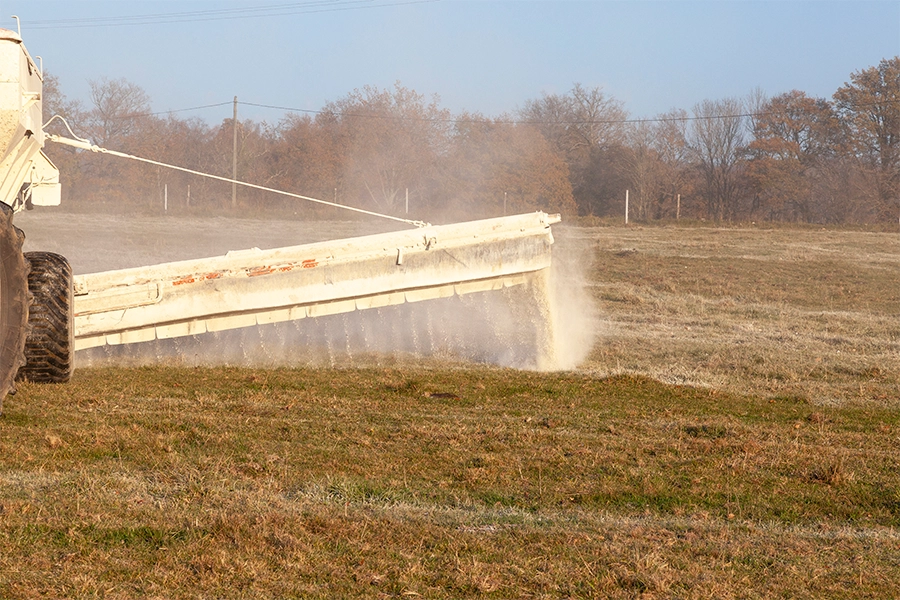
Geopolitical tensions in the Middle East are exacerbating fertilizer shortages, with critical agricultural inputs caught in shipping delays, impacting global food security.
Middle East conflict: F&B impacts
The Strait of Hormuz crisis is causing significant disruptions in the global F&B sector, primarily due to rising costs for fertilizers, energy, and key agricultural raw materials. Authorities estimate that there are currently several hundred to over a thousand ships stuck or waiting around the Strait of Hormuz and adjacent waters.
Fertilizer shortages, caused by supply chain bottlenecks and higher energy prices, threaten to reduce crop yields, raising production costs across the board, which could lead to price hikes for staple foods, such as grains, oilseeds, and sugars, putting pressure on manufacturers and consumers.
Global shipping delays are exacerbating supply chain challenges, making it harder for countries to import essential food ingredients, particularly in regions heavily reliant on imports. The supply crunch could lead to food insecurity in developing countries, further inflating food prices and intensifying competition for limited resources.
In response, the F&B sector might pivot toward local sourcing and sustainable agricultural practices to reduce dependence on volatile international trade. Meanwhile, the financial strain from increased costs and disrupted supply chains may push small to medium-sized producers to seek more resilient business models.
Overall, this crisis underscores the fragility of the global food system, highlighting the urgent need for adaptability and investment in sustainable, local solutions. Cargill’s chief economist, Lauren Bresnahan, recently told Food Ingredients First how global food systems are far more vulnerable than policymakers assume.
Source: https://www.foodingredientsfirst.com/news/strait-of-hormuz-global-agrifood.html
.png)