By James Darley
BlackRock's Larry Fink, Shell's Wael Sawan & TotalEnergies' Patrick Pouyanné warn that war in the Middle East could lead to global shortages and recessions
It has been four weeks since the conflict in the Middle East began and the war’s effects on the global energy market are now impossible to ignore.
Brent crude is trading solidly above US$100 a barrel and gas prices in Europe and Asia are climbing fast.
Meanwhile, some of the world's most powerful business leaders are sounding the alarm.
Speaking at CERAWeek – the world’s largest energy conference – in Houston on Tuesday, a succession of major execs delivered sobering warnings about the situation.

'Stark and steep recession'
Few voices carry more weight in global finance than Larry Fink, the CEO of BlackRock.
Since its founding in 1988, BlackRock has become the world’s largest asset manager, with a portfolio valued at around US$14tn.
In an exclusive interview with the BBC, he discussed the US-Israel-Iran war and set out what he sees as two possible outcomes.
If the conflict is resolved and Iran is reintegrated into the international community, Larry suggested, oil prices could fall back below pre-war levels.
But if not, he warned of "years of above US$100, closer to US$150 oil, which has profound implications in the economy".
This, he suggested, could lead to a “stark and steep recession”.
He was also unequivocal about the human cost of sustained high energy prices, describing them as "a very regressive tax" that "affects the poor more than the wealthy".
For Larry, the crisis speaks to a broader argument about inequality that he made earlier this week in his annual letter to BlackRock’s investors.
His view is that the concentration of wealth among asset owners, already a defining feature of the post-2008 era, risks being turbocharged by both energy insecurity and the rise of AI.
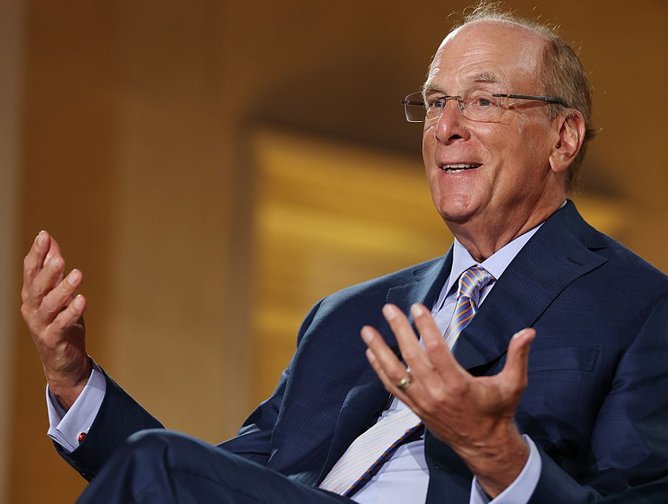
Larry Fink, CEO of BlackRock. Credit: Getty
A problem for Europe
While Larry framed the crisis in macro-economic terms, Wael Sawan, CEO of Shell, was rather more specific – and rather more urgent.
Speaking also at CERAWeek, he warned that energy shortages could hit Europe as soon as next month.
"South Asia was first to get that brunt," he said. "That's moved to Southeast Asia, Northeast Asia and then more so into Europe as we get into April."
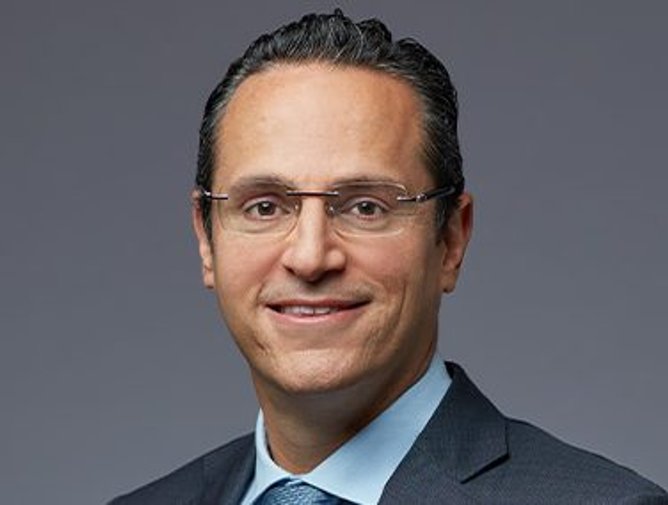
Wael Sawan, CEO of Shell. Credit: Shell
Jet fuel has already been affected by the conflict, with diesel expected to follow soon. Then, petrol and gasoline.
Wael’s remarks were echoed by Germany's Economy Minister, Katherina Reiche, who warned that supply scarcity could hit her country in late April or May if the fighting in the Middle East continues.
For Wael, the crisis has crystallised something he believes governments have been slow to grasp: that energy security and national security are not separate conversations.
Countries, he argued, cannot have one without the other.
Shell is now actively working with governments on storage and purchasing options to help manage what could be a turbulent spring.

Katherina Reiche, Germany's Economy Minister. Credit: Clean Energy Wire
An unprecedented crisis
If Larry offered the economic framework and Wael the near-term operational warning, it was Patrick Pouyanné, the Chairman and CEO of French utility TotalEnergies, who gave perhaps the most striking assessment of what is happening in the physical energy markets right now.
Roughly 15% of TotalEnergies' production is currently offline as a result of the conflict, Patrick told CNBC in an exclusive interview at CERAWeek.
Yet with Brent above US$100, he said, surging prices have more than compensated for the lost barrels.
The bigger story, he argued, lies not in crude oil but in refined products.
"The Brent market is okay, but the products market, which is the one which impacts customers […] is much higher than Brent," he said.
He went further, stating that the world has "never experienced" refining margins at their current levels.
The Strait of Hormuz, the closure of which has choked global shipping lanes, carries not only oil but around 30% of the world's fertiliser supply, putting the spring planting season in jeopardy across the world.
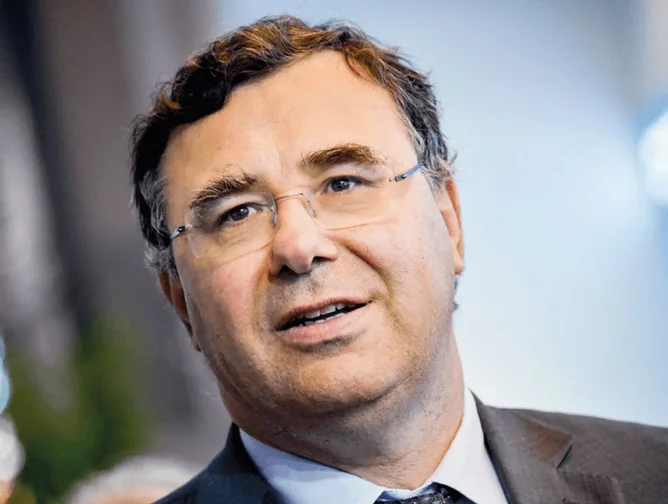
Patrick Pouyanné, CEO of TotalEnergies. Credit: TotalEnergies
On gas, Patrick sounded a similarly sharp warning.
Namely, he cautioned that European natural gas was trading around US$18 per million British thermal units on Tuesday, but he said prices could reach US$40/MMBtu over the summer if the conflict drags on.
The trigger for that scenario is already in motion.
Last week, QatarEnergy confirmed that its Ras Laffan facility, which is the world's largest LNG production site, suffered extensive damage in an Iranian drone attack, effectively removing 20% of global LNG supply from the market almost overnight.
As the largest exporter of US LNG, TotalEnergies says it can still fulfil customer orders in Europe and Asia thanks to its diversified global portfolio, but the company is on high alert nonetheless.
Patrick was clear that his firm’s flexibility has its limits. The longer the conflict continues, the narrower those limits become.
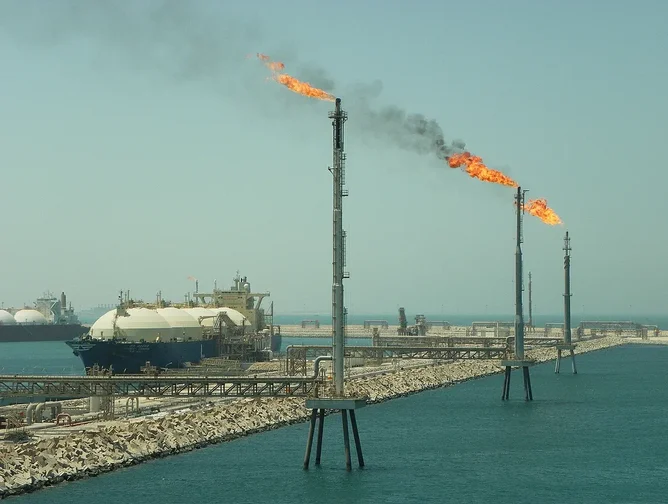
Ras Laffan, the world's largest LNG production hub, was critically damaged last week. Credit: Matthew Smith
A market at a crossroads
Taken together, the messages from Houston this week paint a picture of an energy market under extraordinary strain.
In response, the business community is rapidly recalibrating.
Whether that recalibration leads to lasting change in how governments and companies approach energy security, or whether it fades once the immediate crisis passes, remains to be seen.
For now, the bill is already landing on consumers and, as Larry took pains to point out, it will not land on everyone equally.
Source: https://energydigital.com/news/oil-crisis-what-shell-blackrock-totalenergies-ceos-say
.png)