Οι Συμφωνίες του Αβραάμ, μια διπλωματική πρωτοβουλία που ξεκίνησε από τον πρόεδρο των Ηνωμένων Πολιτειών Ντόναλντ Τραμπ το 2020, είχαν ως αρχικό στόχο την ομαλοποίηση των σχέσεων μεταξύ του Ισραήλ και ορισμένων αραβικών χωρών. Βασισμένες στο όνομα του πατριάρχη Αβραάμ, που τιμάται από Χριστιανούς, Εβραίους και Μουσουλμάνους, οι συμφωνίες αυτές αποσκοπούσαν στην προώθηση μιας υποτιθέμενης χαμένης ενότητας μεταξύ των τριών μονοθεϊστικών θρησκειών. Μέχρι το 2021, χώρες όπως το Μπαχρέιν, τα Ηνωμένα Αραβικά Εμιράτα και το Μαρόκο υπέγραψαν τις συμφωνίες, ενώ το Σουδάν εξέφρασε ενδιαφέρον χωρίς να ολοκληρώσει τη διαδικασία.Η δεύτερη κυβέρνηση Τραμπ προσπαθεί να επεκτείνει τις Συμφωνίες, περιλαμβάνοντας χώρες όπως ο Λίβανος, η Συρία και η Σαουδική Αραβία. Η πρωτοβουλία αυτή δεν ήταν απλώς μια ειρηνευτική προσπάθεια, αλλά ένα στρατηγικό εργαλείο των ΗΠΑ για την ενίσχυση της σταθερότητας γύρω από το Ισραήλ, ανεξάρτητα από την επίλυση του παλαιστινιακού ζητήματος, και την ενοποίηση αραβικών χωρών ενάντια στο Ιράν.
Με την άνοδο του Τζο Μπάιντεν στην προεδρία, το εγχείρημα φάνηκε να παγώνει, ιδιαίτερα μετά τον πόλεμο του Ισραήλ κατά της Χαμάς και της Χεζμπολάχ,στη Λωρίδα της Γάζας και τον Λίβανο.
Ωστόσο, μια απροσδόκητη εξέλιξη ήρθε με την πρόσφατη σύνοδο κορυφής C5+1 (Κεντρική Ασία και ΗΠΑ), όπου το Καζακστάν ανακοίνωσε την προσχώρησή του στις Συμφωνίες του Αβραάμ. Αυτή η κίνηση σηματοδοτεί όχι μόνο την επανενεργοποίηση του σχεδίου, αλλά και την επέκτασή του πέρα από την περιοχή του Μαγκρέμπ, στην Κεντρική Ασία και τον Καύκασο.
ΤΟ ΙΣΤΟΡΙΚΟ ΠΛΑΙΣΙΟ ΚΑΙ Η ΠΡΟΕΤΟΙΜΑΣΙΑ
Οι Συμφωνίες του Αβραάμ δεν ήταν ποτέ μια απλή διπλωματική πρωτοβουλία. Κατά την πρώτη θητεία του Τραμπ, οι ΗΠΑ κατέβαλαν τεράστιες προσπάθειες για να ενώσουν το Ισραήλ με αραβικές χώρες, με στόχο την απομόνωση του Ιράν και την πίεση προς την Τουρκία του Ρετζέπ Ταγίπ Ερντογάν, ο οποίος διατηρούσε αντι-ισραηλινή στάση. Η ιδέα επεκτάθηκε γρήγορα πέρα από τον αραβικό κόσμο. Προσπάθειες για εμπλοκή των χωρών της Κεντρικής Ασίας ξεκίνησαν ήδη από το 2021, με το Ουζμπεκιστάν να δωρίζει 50 εκατομμύρια δολάρια στο Ταμείο των Συμφωνιών του Αβραάμ, που ιδρύθηκε από τις ΗΠΑ, το Ισραήλ και τα ΗΑΕ.
Η πρόσφατη πρόσβαση του Καζακστάν στις συμφωνίες δεν ήταν τυχαία. Το έγγραφο αναφέρει ότι ο Αμερικανός Ειδικός Απεσταλμένος στη Μέση Ανατολή Στιβ Γουίτκοφ, πραγματοποίησε εκτεταμένη προπαρασκευαστική εργασία, συμπεριλαμβανομένων επισκέψεων στο Μπακού του Αζερμπαϊτζάν τον Μάρτιο του 2025. Το Αζερμπαϊτζάν φαίνεται να έπαιξε κρίσιμο ρόλο ως διαμεσολαβητής, εκμεταλλευόμενο τις στενές σχέσεις του με τις ΗΠΑ και το Ισραήλ. Επιπλέον, υπάρχουν ενδείξεις ότι η μυστική πλευρά της ειρηνευτικής συμφωνίας μεταξύ Αρμενίας και Αζερμπαϊτζάν τον Αύγουστο του 2025, περιλαμβάνει ρήτρα για την προσχώρησή τους στις Συμφωνίες του Αβραάμ.
Από την πλευρά του Καζακστάν, η κίνηση παρουσιάζεται ως τυπική, μια συνέχεια των διμερών σχέσεων με το Ισραήλ από το 1992. Ωστόσο, Αμερικανοί αναλυτές όπως αυτοί του Atlantic Council βλέπουν σε αυτή, το ξεκίνημα μιας βαθύτερης στρατηγικής. Η μυστικότητα γύρω από τις προετοιμασίες υποδηλώνει ότι η επέκταση αυτή δεν είναι αθώα, αλλά μέρος ενός σχεδίου που απειλεί πολλαπλούς δρώντες στην περιοχή.
ΓΕΩΠΟΛΙΤΙΚΕΣ ΕΠΙΠΤΩΣΕΙΣ: Η ΣΤΟΧΕΥΣΗ ΤΗΣ ΡΩΣΙΑΣ
Η κύρια στόχευση των ΗΠΑ μέσω αυτής της επέκτασης είναι η Ρωσία. Η Κεντρική Ασία και ο Καύκασος αποτελούν ιστορικές σφαίρες επιρροής της Μόσχας, κληρονομιά της Σοβιετικής Ένωσης. Οι Συμφωνίες του Αβραάμ, επεκτεινόμενες εδώ, στοχεύουν στην αποδυνάμωση αυτής της επιρροής, προωθώντας εναλλακτικές συμμαχίες με τις ΗΠΑ και το Ισραήλ. Είναι προφανές ότι η Ουάσιγκτον επιδιώκει αν όχι να εκδιώξει, τουλάχιστον να μειώσει την επιρροή της Ρωσίας από αυτές τις περιοχές.
Πρόσφατες πληροφορίες δείχνουν ότι η Ρωσία έχει ήδη αντιδράσει. Μετά την ανακοίνωση του Καζακστάν, ο πρόεδρος Βλαντιμίρ Πούτιν και ο Καζάκος ομόλογος του υπέγραψαν Διακήρυξη Στρατηγικής Συνεργασίας και Συμμαχίας, μαζί με 13 άλλα έγγραφα συνεργασίας σε τομείς όπως η οικονομία, οι μεταφορές και η εκπαίδευση. Αυτή η κίνηση φαίνεται ως δελεαστική για να διατηρήσει το Καζακστάν στην τροχιά της Μόσχας, αλλά ρωσικές πηγές αφήνουν να εννοηθεί, ότι μπορεί να ακολουθήσουν δύσκολες εξελίξεις εάν οι σύμμαχοι της Ρωσίας συνεχίσουν να “κάθονται σε δύο καρέκλες”.
Επιπλέον, η δημιουργία ενός “Διαδρόμου NATO” μέσω της Κασπίας Θάλασσας, ο οποίος θα μπορούσε να δημιουργηθεί, απειλεί την ασφάλεια της Ρωσίας. Αυτός ο διάδρομος θα επέτρεπε την παράκαμψη της Ρωσίας για εξαγωγές φυσικών πόρων, ενισχύοντας την οικονομική ανεξαρτησία των κεντροασιατικών χωρών από τη Μόσχα.
ΣΤΟΧΕΥΣΗ ΤΟΥ ΙΡΑΝ ΚΑΙ ΤΗΣ ΤΟΥΡΚΙΑΣ
Το Ιράν είναι ένας ακόμα κύριος στόχος. Οι Συμφωνίες του Αβραάμ σχεδιάστηκαν αρχικά για να ενώσουν αραβικές χώρες ενάντια στην Τεχεράνη. Η κίνηση προς την Κεντρική Ασία επεκτείνει αυτό το μέτωπο, καθώς το Αζερμπαϊτζάν και το Καζακστάν, μέσω της συνεργασίας με τις ΗΠΑ, μπορούν να ενισχύσουν τις θέσεις τους απέναντι στο Ιράν. Κύκλοι της Τεχεράνης εκφράζουν ανησυχίες, βλέποντας στην πρόσβαση του Ισραήλ και του ΝΑΤΟ στην Κασπία Θάλασσα μια απειλή για τα συμφέροντα του Ιράν, ιδιαίτερα στα τεράστια αποθέματα φυσικού αερίου.
Ιστορικά, το Ιράν έχει στενές σχέσεις με την Αρμενία, ενώ το Αζερμπαϊτζάν, με τις στενές σχέσεις του με το Ισραήλ (το οποίο παρέχει όπλα και τεχνογνωσία), αποτελεί αντίπαλο. Η μυστική ρήτρα στην ειρηνευτική συμφωνία Αρμενίας-Αζερμπαϊτζάν, εάν ισχύει, θα μπορούσε να απομονώσει περαιτέρω το Ιράν.
Για την Τουρκία, η επέκταση αυτή είναι ένα πλήγμα στα σχέδια της για ενότητα των τουρκικών λαών μέσω του Οργανισμού Τουρκικών Κρατών (OTS). Η Άγκυρα αντιτάχθηκε εξαρχής στις Συμφωνίες του Αβραάμ λόγω της αντι-ισραηλινής πολιτικής της. Η C5+1 θεωρείται εναλλακτική στον Οργανισμό Τουρκικών Κρατών, απειλώντας το όραμα του “Μεγάλου Τουράν”. Το Αζερμπαϊτζάν, ενώ προωθεί την πρόσβαση του Καζακστάν, κρατά χαμηλό προφίλ λόγω των δεσμών του με την Τουρκία και της παρουσίας εκατομμυρίων Αζέρων στο Ιράν, οι οποίοι μπορεί να δουν αυτή την κίνηση ως προδοσία.
Η ΚΙΝΑ ΚΑΙ ΤΟ ΣΤΡΑΤΙΩΤΙΚΟ ΕΝΔΙΑΦΕΡΟΝ ΤΩΝ ΗΠΑ
Η Κίνα είναι ο τέταρτος παίκτης που πλήττεται. Οι ΗΠΑ επιδιώκουν τον έλεγχο των διαδρομών μεταφοράς στην Κεντρική Ασία, που είναι κρίσιμες για την πρωτοβουλία “Μία Ζώνη, Ένας Δρόμος” της Κίνας. Επιπλέον, το στρατιωτικό ενδιαφέρον των ΗΠΑ στην περιοχή οφείλεται στην εγγύτητα με τις βάσεις πυραύλων της Κίνας στο Σιντζιάνγκ, όπου βρίσκονται οι κύριες εγκαταστάσεις των Στρατηγικών Πυραυλικών Δυνάμεων της Κίνας.
Πρόσθετες λεπτομέρειες από γεωπολιτικές αναλύσεις δείχνουν ότι η επιστροφή αμερικανικών στρατευμάτων στην Κεντρική Ασία φαντάζει πιο ρεαλιστική από την επιστροφή στην αεροπορική βάση Μπαγκράμ στο Αφγανιστάν. Αυτό θα επέτρεπε παρακολούθηση και πιθανή απειλή κατά κινεζικών εγκαταστάσεων, εντείνοντας την αντιπαλότητα ΗΠΑ-Κίνας.
ΣΥΜΠΕΡΑΣΜΑ: ΤΟ ΜΕΓΑΛΟ ΠΑΙΧΝΙΔΙ ΣΤΗΝ ΚΕΝΤΡΙΚΗ ΑΣΙΑ
Η επέκταση των Συμφωνιών του Αβραάμ στην Κεντρική Ασία και τον Καύκασο αποτελεί μέρος ενός νέου “μεγάλου παιχνιδιού”, παρόμοιου με αυτό του 19ου αιώνα μεταξύ Βρετανίας και Ρωσίας. Οι ΗΠΑ, μέσω αυτής της πρωτοβουλίας, επιδιώκουν να αναδιατάξουν τις ισορροπίες, αποδυναμώνοντας τη Ρωσία, το Ιράν, την Τουρκία και την Κίνα, ενώ ενισχύουν το Ισραήλ και τις δικές τους στρατηγικές θέσεις.
Ωστόσο, αυτή η κίνηση ενέχει κινδύνους. Η μυστικότητα και οι αντιδράσεις δείχνουν ότι η περιοχή μπορεί να γίνει πεδίο έντονων αντιπαραθέσεων. Η Ρωσία έχει ήδη απαντήσει με ενίσχυση συμμαχιών, ενώ η Τουρκία πιθανότατα λαμβάνει μέτρα για να ματαιώσει τα σχέδια. Το Ιράν και η Κίνα, από την πλευρά τους, θα εντείνουν τις προσπάθειές τους για διατήρηση επιρροής.
Συνολικά, οι Συμφωνίες του Αβραάμ, από σύμβολο ενότητας, κατά τη διάρκεια της πρώτης θητείας Τραμπ, μετατρέπονται σε εργαλείο γεωπολιτικής χειραγώγησης κατά τη δεύτερη θητεία του. Η εξέλιξη αυτή υπογραμμίζει την πολυπλοκότητα των διεθνών σχέσεων και την ανάγκη για προσεκτική ανάλυση των κρυφών σχεδίων που κρύβονται πίσω από όλες τις διεθνείς πρωτοβουλίες. Προς το παρόν, μπορούμε να προβλέψουμε με σχετική βεβαιότητα, ότι οι αμερικανικές πρωτοβουλίες στη περιοχή θα φέρουν νέες αντιπαραθέσεις.
Πηγή: geoeurope.org
Azerbaijan's Inclusion in the Abraham Accords will Transform the Commercial Architecture of Eurasia's Southern Rim Featured
By Michael Tanchum, (Thursday, 10 April 2025)
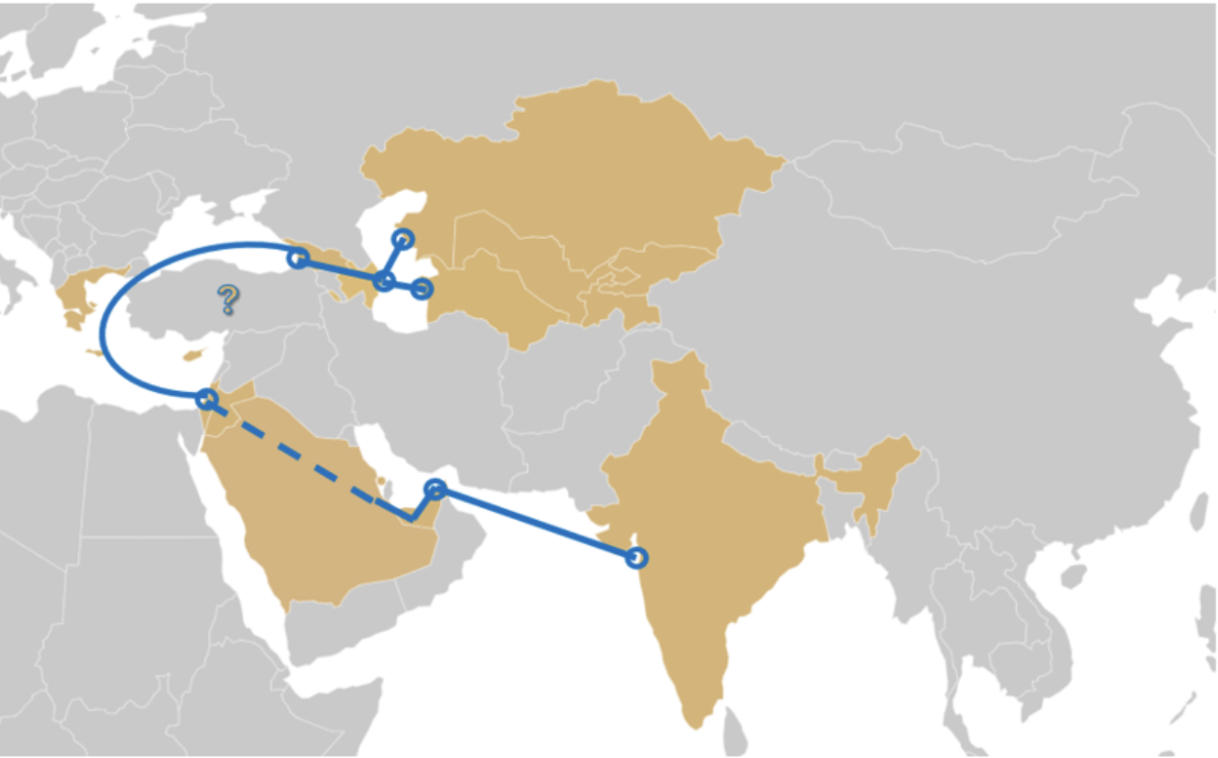
The Eastern Mediterranean and the Black Sea are one natural waterway forming the core of a multi-modal connectivity arc that can serve as the transportation backbone of a commercial corridor spanning the Middle East and Central Asia. Azerbaijan’s inclusion in a wider Abraham Accords framework could radically reconfigure trade patterns and manufacturing value chains across the southern rim of Eurasia, to the benefit of U.S. strategic interests and those of its partners. While strengthening U.S.-Israel-Azerbaijan trilateral defense cooperation is a response to the looming prospect of a military showdown with Iran, the geo-economic significance of Azerbaijan’s inclusion in the Abraham Accords is of long-term strategic consequence. With the ports on Israel’s Eastern Mediterraneancoast and Azerbaijan’s Caspian Sea coast serving as anchor points, the India-Middle East-Europe Corridor can be linked to the Trans-Caspian International Transport Route, creating an crescent of commercial cooperation from India to the Central Asian Republics via the UAE, Saudi Arabia, Jordan, Israel, Georgia, and Azerbaijan, providing counterweight to the westward expansion of Chinese economic hegemony across the Central Asia-Caucasus region and the Middle East.
BACKGROUND: In early March 2025, the office of Israeli Prime Minister Binyamin Netanyahu made public that it favors elevating the trilateral partnership between Israel, Azerbaijan and the U.S.. Following a motion in the Israeli Knesset on "Upgrading the Strategic Alliance between Israel and Azerbaijan," a flurry of calls arose for Azerbaijan’s inclusion in the Abraham Accords. The September 15, 2020, agreement normalized relations between the United Arab Emirates (UAE) and Israel, followed by the establishment of relations between Israel and Bahrain and Sudan, respectively, and the restoration of relations with Morocco. The Abraham Accords also consists of an expanded framework of strategic and economic initiatives among the participants, developed in partnership with the U.S.
Azerbaijan and Israel have enjoyed an all-weather strategic relationship since diplomatic relations were established in the early 1990s following Azerbaijan’s independence. The two states have developed deep defense cooperation over the past 30 years, based on countering the threat Iran poses to both Israel and Azerbaijan, which shares a 428-mile (689 km) border with the Islamic Republic. Key proponents of extending the Abraham Accords to Azerbaijan have emphasized the Azerbaijani-Israeli defense relationship’s durability and Azerbaijan’s reliability as a principal oil supplier to Israel. Azerbaijan and Israel enjoy commercial cooperation in telecoms and other technology sectors. The State Oil Company of Azerbaijan (SOCAR) recently established the new subsidiary “SOCAR Tamar” following its March 17, 2025 acquisition of a 10 percent stake in Israel’s Tamar offshore natural gas field in the Eastern Mediterranean. Azerbaijan has also played an important mediating role between Baku’s close partner Turkey and Israel during times of tension.
Netanyahu’s public commitment to strengthen Israel’s trilateral relationship with Azerbaijan and the U.S was preceded by a collection of letters sent to U.S. President Donald Trump at the end of February by prominent rabbis advocating Azerbaijan’s inclusion in the Abraham Accords. Among them was a senior rabbi in the UAE and personal friend of Trump’s son-in-law Jared Kushner, who played a key role in the signing of the Abraham Accords. Additionally, opinion pieces from Israeli and American policy communities, including in the Wall Street Journal, added further political momentum amidst escalating tensions between Washington and Tehran over Iran’s nuclear weapons program. Two days after Iran’s Supreme Leader Ayatollah Ali Khamenei’s March 12, 2025, rejection of the U.S. proposal to hold negotiations about Tehran’s nuclear weapons program, Trump’s special envoy to the Middle East Steve Witkoff visited Baku after an overnight visit to Moscow, in what appears to be a coordinated effort to prepare for possible military action against Iran by Israel or the U.S., following the exhaustion of diplomatic efforts.
IMPLICATIONS: Beyond defense cooperation, a compelling strategic and geo-economic logic exists to include Azerbaijan in a wider Abraham Accords framework, building upon the Azerbaijan’s parallel and separate bilateral economic relations with Israel and the UAE. Extending the Abraham Accords framework outside the Arab World has precedence in the quadrilateral cooperation among India, Israel, the UAE, and the U.S. – the “I2U2” framework – emerging from India’s robust yet parallel commercial cooperation and joint venture investments with Israel and the UAE. Trilateral cooperation emerged organically from the synergies between India’s commercial ventures with Israel and the UAE, traditionally India’s third-largest trading partner and Arabian Sea neighbor.
In February 2022, the UAE signed a Comprehensive Economic Partnership Agreement (CEPA) with India followed by the May 2022 signing of a similar UAE-Israel free trade agreement. The two trade agreements paved the way for initiating three-way coordination in developing an India-Middle East Corridor. Quadrilateral cooperation involving the U.S. was then formalized with the July 2022 I2U2 summit.
The extended Abraham Accords cooperation gave rise to a vision of an India-to-Europe commercial corridor in which the UAE’s ports serve as the Indian Ocean connectivity node with Israel’s Eastern Mediterranean ports serving as the maritime outlet to Europe, connected by a UAE-to-Israel railway network transiting Saudi Arabia and Jordan. Once the transportation route is operational, Indian goods leaving Mumbai could arrive on the European mainland in as little as 10 days. An initiative to realize this corridor, now known as the India-Middle East-Europe Corridor (IMEC) was formalized with the signing of the September 9, 2023, Memorandum of Understanding at the New Delhi G20 Summit, with India, the U.S., the UAE, Saudi Arabia, France, Germany, Italy, and the EU as signatories.
Research has shown that commercial corridors only emerge where the requisite large investments in port and rail infrastructure are coupled with an industrial base anchored in manufacturing value chains. The IMEC is highly conducive for value chain integration because of the existing synergies between India’s commercial ventures with its Arab Gulf partners and its commercial ventures with Israel, as exemplified by the manufacturing value chain in food production that is one of the leading drivers of the IMEC’s development. India’s “Food Corridor to the Middle East” is driven by India’s investment partnerships with the UAE and Saudi Arabia that rely on the transformation of India’s agriculture and water management sectors being implemented through India’s partnership with Israel. Similar synergies exist in other sectors, with the most promising in green energy and innovative technology, which has already lead to joint venture production facilities in green manufacturing.
The inclusion of Azerbaijan, along with Georgia, in the wider Abraham Accords framework holds a similar potential to create a new trans-regional commercial architecture. The UAE is Azerbaijan’s top Arab trading partner, accounting for 40 percent of Azerbaijan’s trade with the Arab World. The UAE is also the largest Arab investor in Azerbaijan and one of the top 10 global investors in Azerbaijan, accounting for 7 percent of Azerbaijan’s FDI inflow. In 2023, the UAE’s Abu Dhabi National Oil Company acquired a 30 percent stake in Azerbaijan’s Absheron natural gas field in the Caspian Sea. Similarly, the UAE is Georgia’s largest trading partner in the Arab world, accounting for 63 percent of Georgia’s trade with the region. Trade is likely to increase further with the UAE-Georgia CEPA, which came into effect in June 2024. The UAE is also invested in solar power plant development in both Azerbaijan and Georgia. Most significantly, in March 2024, the UAE’s AD Ports group, acquired a 60 percent ownership share in the Tbilisi Dry Port, a new custom-bonded and rail-connected intermodal logistics hub in Georgia. At the heart of the Trans-Caspian Route, the port is a key logistics facility for the rail connection linking Georgia’s Black Sea coast and Azerbaijan’s Caspian coast.
Azerbaijan’s Baku port is the connectivity node from where the Wider Black Sea region connects to Central Asia across the Caspian Sea. The Trans-Caspian International Transport Route (TITR) connecting the Caspian and Black Seas via Azerbaijan and Georgia, commonly referred to as the Middle Corridor, was developed as an alternative to the Russia-based Northern Corridor for China-to-Europe trade. The TITR consists of multi-modal transportation links for container transshipment via Kazakhstan’s Caspian port Aktau to the specially constructed port of Baku at Alat from where goods can be shipped by railway connection from Azerbaijan to Georgia’s Black Sea ports and in turn to Israel’s Eastern Mediterranean ports. By linking IMEC and the TITR, India will possess its own multi-modal corridor to access Central Asia, enabling India to effectively compete with China in Eurasia without being reliant on Russia or Iran. IMEC provides India with a streamlined alternative to its 25-year effort to establish the troubled International North-South Transit Corridor (INSTC) to access Central Asia through Iran’s Chabahar port, serving as the Indian Ocean connectivity node with overland transportation links running northward via Iran and Afghanistan.
The multi-modal corridor connecting India to Central Asia would also open the opportunity for Turkey to participate in IMEC. The UAE’s ports and logistics giant DP World operates Turkey’s Yarımca port, reputed to be the most technologically advanced in Turkey. Yarımca’s Marmara coast location is highly suited for intermodal transportation in which cargo can be transshipped to the Black Sea or Georgia and Azerbaijan by rail from Kars via the Baku-Tbilisi-Kars railway.
CONCLUSION: The September 2023 signing of the IMEC declaration was preceded by the July 2022 I2U2 summit, the first convening of the heads of government of India, Israel, the UAE, and the U.S. As a step toward linking IMEC with the Trans-Caspian Corridor, a CC-I2U2 summit should be convened with the heads of Azerbaijan and Georgia participating. The format can be extended to include Central Asian Republics as well as Saudi Arabia and Jordan in anticipation of the extended arc of joint venture manufacturing investments and commercial cooperation.
By including Azerbaijan in a wider Abraham Accords framework, the U.S. can upend the geopolitics of connectivity in Central Asia, halting the westward expansion of Chinese commercial hegemony across the Eurasian landmass. Linking the IMEC corridor to the Caspian shores of Kazakhstan via a multi-modal sea route with trans-shipment across Georgia and Azerbaijan will effectively end India’s isolation from Central Asia – a strategic objective long sought by New Delhi. Consolidating the triangle of bilateral economic relationships among Azerbaijan, Israel, and the UAE into a multilateral framework through U.S. facilitation under the Abraham Accords is a necessary first step and a boon to the U.S. strategic position across Eurasia’s southern rim.
AUTHOR BIO: Prof. Michaël Tanchum teaches international relations of the Middle East and North Africa at the University of Navarra, Spain and an associate fellow in the Economics and Energy at the Middle East Institute in Washington, D.C. He is also a Senior Associate Fellow at the Austrian Institute for European and Security Studies (AIES) and an affiliated scholar of the Centre for Strategic Policy Implementation at Başkent University in Ankara, Turkey (Başkent-SAM) and the NTU-SBF Centre for African Studies in Singapore. @michaeltanchum
Source: https://www.cacianalyst.org/publications/analytical-articles/item/13860-azerbaijans-inclusion-in-the-abraham-accords-will-transform-the-commercial-architecture-of-eurasias-southern-rim.html
.png)