«Σήμερα, ενέκρινα τη μεγαλύτερη συμφωνία φυσικού αερίου στην ιστορία του Ισραήλ, ύψους 112 δισεκ. σέκελ» είπε στο τηλεοπτικό διάγγελμά του ο Ισραηλινός πρωθυπουργός. «Η συμφωνία επιτεύχθηκε σε συνεργασία με την αμερικανική εταιρεία Chevron και, από το συνολικό ποσό, τα 58 δισεκ. σέκελ (περίπου 15,3 δισεκ. ευρώ) θα καταλήξουν στα κρατικά ταμεία» πρόσθεσε.
«Είναι η μεγαλύτερη συμφωνία εξαγωγής (φυσικού αερίου) στην ιστορία του Ισραήλ», σχολίασε από την πλευρά του ο υπουργός Ενέργειας Έλι Κόεν.
Σύμφωνα με τον Νετανιάχου, η συμφωνία θα βοηθήσει να διασφαλιστεί η σταθερότητα στην περιοχή και θα βοηθήσει να ξεπεραστεί η ενεργειακή κρίση στην Αίγυπτο, η οποία έχει δαπανήσει δισεκατομμύρια δολάρια για εισαγωγές υγροποιημένου φυσικού αερίου αφού η δική της παραγωγή δεν κάλυπτε τη ζήτηση.
Η παραγωγή της Αιγύπτου άρχισε να μειώνεται το 2022, αναγκάζοντας τη χώρα να εγκαταλείψει το σχέδιό της να γίνει περιφερειακός κόμβος εφοδιασμού. Έκτοτε, έχει στραφεί στο Ισραήλ για να καλύψει τις ανάγκες της.
[iEpikaira: Ο χάρτης Μπάιντεν σε πλήρη εφαρμογή. Η εξαγωγή ισραηλινού φ/α στην Αίγυπτο ήταν αποτυπωμένη σε αυτόν από το 2014 αν όχι νωρίτερα (1, 2). Δυο αγωγοί φ/α από την ισραηλινή ΑΟΖ προς την Αίγυπτο, ο ένας καταλήγει στο Idku και ο άλλος στη Damietta.
 |
| Λεπτομέρεια χάρτη Μπάιντεν: Αγωγός (με μωβ διακεκομμένη) από την ισραηλινή ΑΟΖ προς την Αίγυπτο με μωβ. Καταλήγει κάπου μεταξύ Idku και Damietta. |
Πηγή: ΑΠΕ - ΜΠΕ liberal.gr
Netanyahu announces $34.7 billion natural gas deal with Egypt
By Lazar Berman
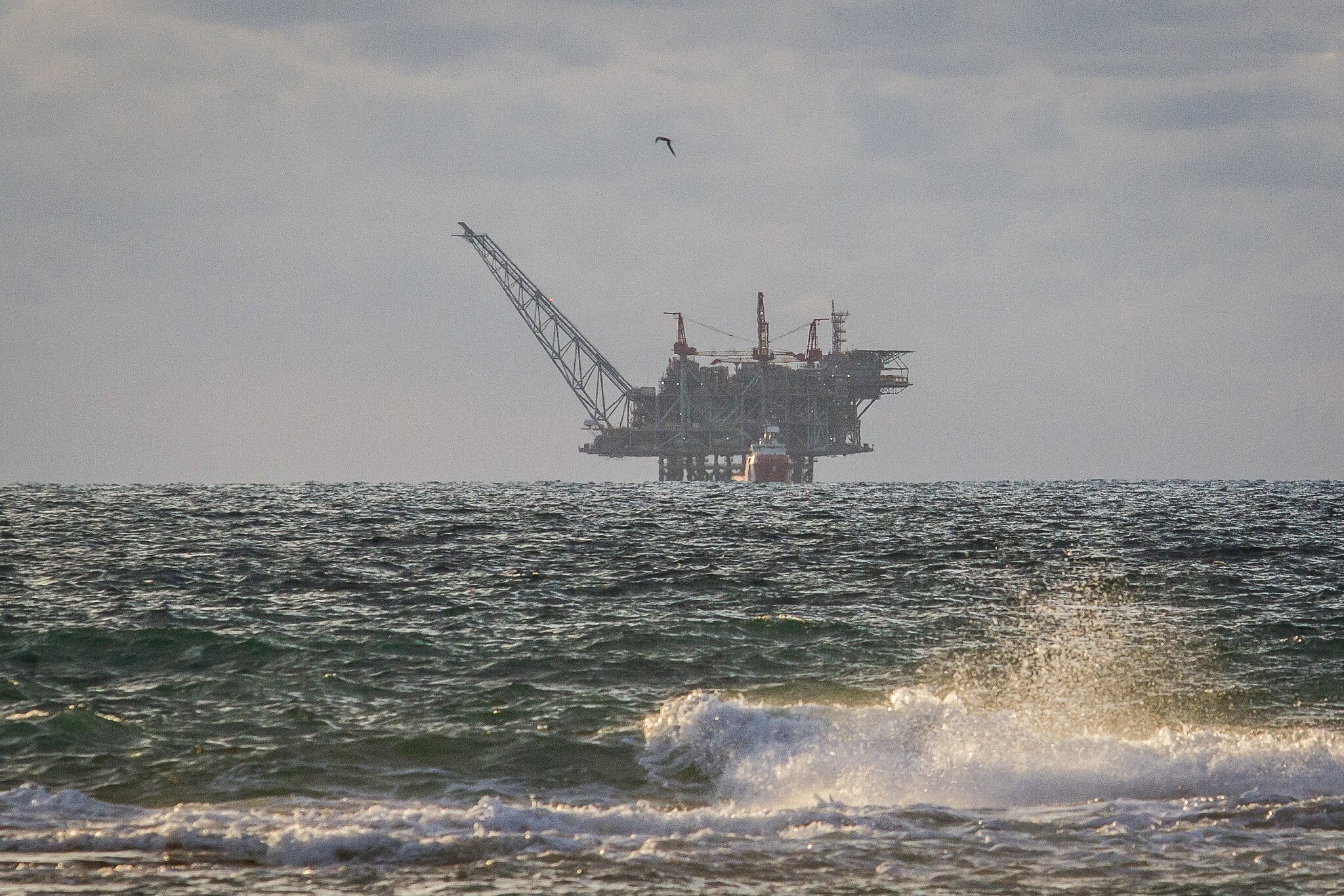
View of the Israeli Leviathan natural gas field gas processing rig as seen from Dor Habonim Beach Nature Reserve, on January 1, 2020. (Flash90/File)
Prime Minister Benjamin Netanyahu announced on Wednesday that he had approved the largest energy deal in Israel’s history, with neighboring Egypt, which is expected to boost Israel’s economy by billions of shekels in the coming years.
In a video statement alongside Energy Minister Eli Cohen, Netanyahu said that the natural gas deal with Cairo was worth NIS 112 billion ($34.7 billion), of which NIS 58 billion ($18 billion) would go into public coffers. In the first four years, he said, around NIS 500 million ($155 million) would go to the state yearly, and this was expected to climb to NIS 6 billion per year ($1.9 billion) by 2033.
“The agreement is with the American company Chevron, with Israeli partners who will supply gas to Egypt,” Netanyahu said.
“This money will strengthen education, health, infrastructure, security, the future of the coming generations,” said Netanyahu, adding that he only approved the deal, which was held up in October, after he had ensured that it met Israel’s vital needs, including security.
“The deal greatly strengthens Israel’s position as a regional energy superpower, and contributes to regional stability,” argued Netanyahu, adding that it would encourage other countries to search for gas in Israel’s waters.
He stressed that the companies would be required to sell natural gas to Israelis “at a good price.”
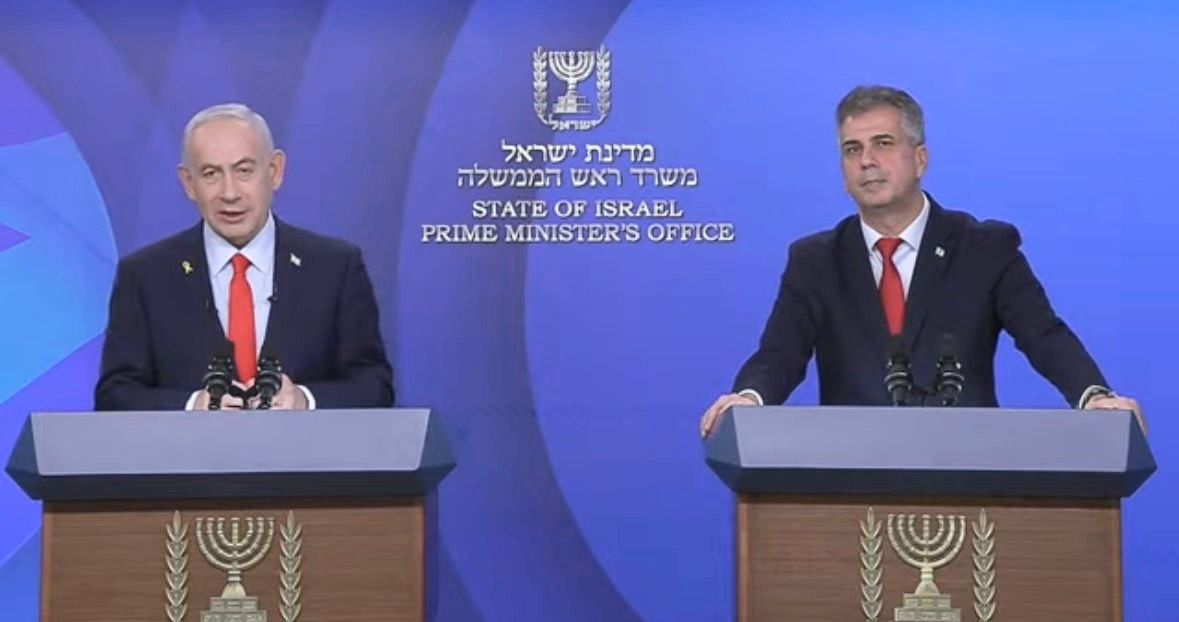
Prime Minister Benjamin Netanyahu, left, in a video statement alongside Energy Minister Eli Cohen, announcing a record gas deal with Egypt, December 17, 2025. (Energy Ministry)
“We have brought another jug of oil to the nation of Israel,” Netanyahu said in a reference to the story of Hanukkah, in which one jug of oil lasted for eight days.
Cohen, standing alongside Netanyahu, called the deal “a historic moment for Israel,” and noted that it was the largest export deal in the country’s history.
Advertisement
Natural gas “is a strategic asset” for Israel, Cohen stressed.
Israeli firm NewMed Energy announced in August the signing of a $35 billion deal to provide Egypt with natural gas. But the deal, which has clear economic incentives for both sides, stalled after Cohen initially refused to approve it, citing a lack of assurances that the Israeli market would receive “fair prices.”
Cohen had also expressed concern that the exports could deplete Israel’s natural gas reserves and harm domestic energy security.
The US was reported to have played a significant role in pressuring Cohen and Netanyahu into the agreement with Egypt, and US Energy Secretary Chris Wright canceled a six-day visit to Israel in October after Cohen refused to sign the deal.
Washington’s interest in the deal stems from a desire to push Israel and Egypt into warmer relations through shared economic interests, Axios reported this month. []
Relations between the two countries have become strained over the past two years following the October 7, 2023, Hamas assault and the subsequent war in Gaza, and the Trump administration is eager to change this, Axios reported, hoping it will lead to other breakthroughs between Israel and its neighbors.
The outlet reported that US President Donald Trump was looking to broker a summit between Netanyahu and his Egyptian counterpart, President Abdel-Fattah el-Sissi.
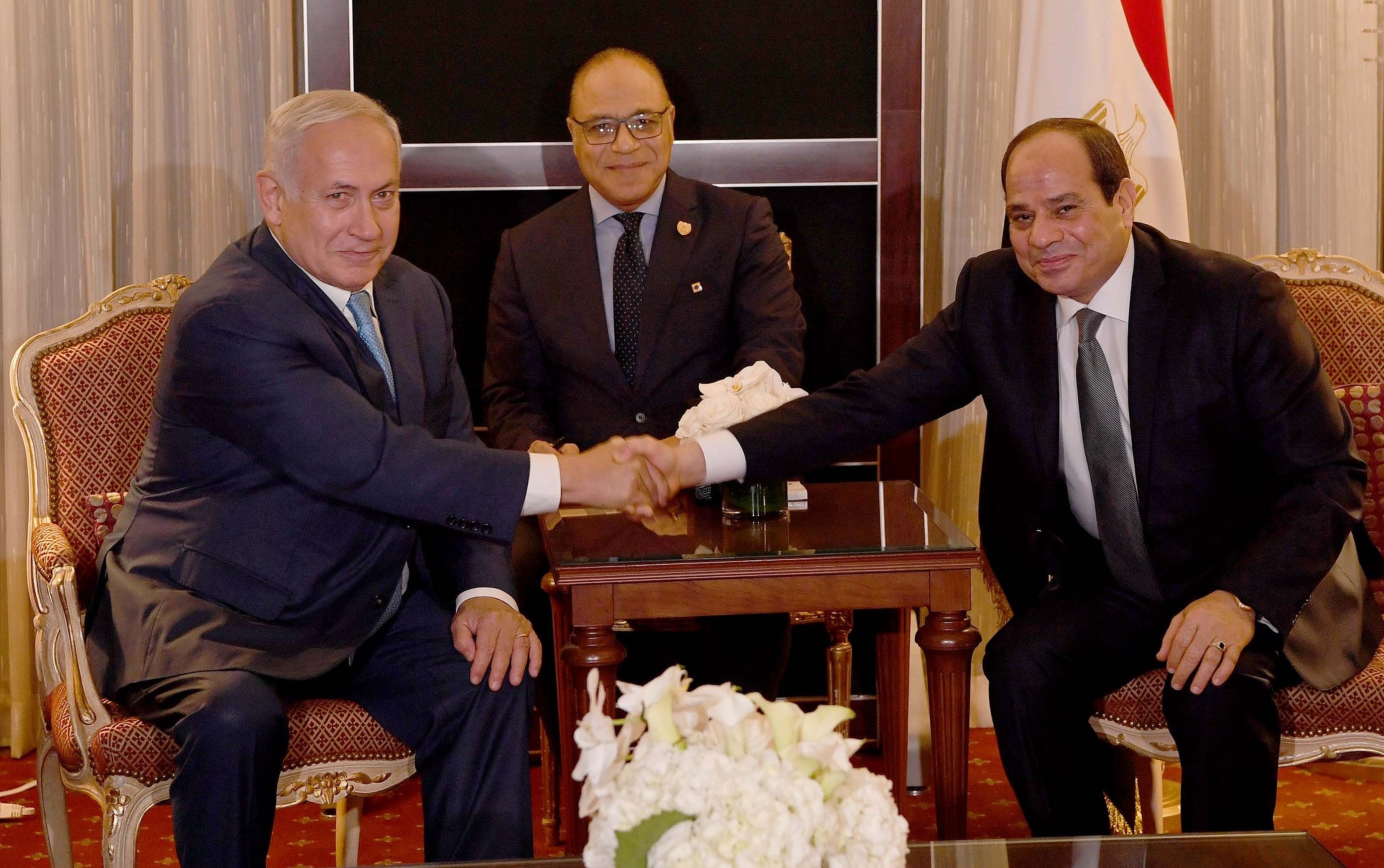
Prime Minister Benjamin Netanyahu (left) with Egyptian President Abdel-Fattah el-Sissi (right) on the sidelines of the UN General Assembly in New York on September 27, 2018. (Avi Ohayon / PMO/ File)
In order to entice Sissi to attend such a meeting, Axios said Israel would be required to make a range of concessions — including signing a strategic gas deal with Cairo.
In a statement issued late on Wednesday, NewMed Energy said it had received “approval to export gas to Egypt, enabling the execution of a deal estimated at roughly $35 billion.”
“This is a historic day for the natural gas sector, one that guarantees continued investment in Israel and creates regulatory stability for years to come,” NewMed CEO Yossi Abu was quoted as saying in the statement.
Both Israel and Egypt have emerged as gas exporters in recent years following major offshore discoveries. Israeli gas accounts for some 15-20 percent of Egypt’s consumption, according to data from the Joint Organisations Data Initiative.
Earlier this year, the Finance Ministry warned that Israel is poised to face a natural gas shortage in the next 25 years as domestic energy needs are growing faster than forecast and gas export sales are robust. A shortfall would lead to higher electricity prices for consumers.
Natural gas from Leviathan, one of the world’s largest deep-water gas discoveries, started to flow to the Israeli domestic market in December 2019.
The partners in the Leviathan reservoir began exporting natural gas to Egypt in January 2020 after signing a deal for 60 billion cubic meters, which is expected to be supplied by the early 2030s.
As of September 2025, Leviathan had supplied 23.5 billion cubic meters of gas to the Egyptian market.
Source: https://www.timesofisrael.com/historic-moment-netanyahu-announces-record-natural-gas-deal-with-egypt/
The real purpose of Israel's gas deal with Egypt

by Ariel Kahana
The signing of the massive gas deal with Egypt goes far beyond its headline price tag of $35 billion. One of the main reasons for the agreement's delay was Egypt's problematic conduct toward Israel on political and security issues.
The understandings between Israel and Egypt on the gas deal do not include an Egyptian commitment to withdraw prohibited forces from the Sinai Peninsula. Israel Hayom has learned that accompanying understandings include dialogue on mechanisms to address Egyptian violations. The US has promised to promote handling of the issue, but there is no clear commitment to rectify the situation.
In Israel, officials believe that once gas deliveries begin and Egypt becomes energy-dependent on Israeli gas, this dependence will serve as leverage to deter Cairo from violating the peace treaty. They also argue that had Israel not supplied Egypt with gas, its southern neighbor would have turned to Qatar. According to information gathered in recent years, Egypt has introduced forces into Sinai far beyond what is permitted under the security annex of the peace treaty. It has also built tunnels deep inside Sinai for storing weapons and has suspiciously extended runways at airfields.
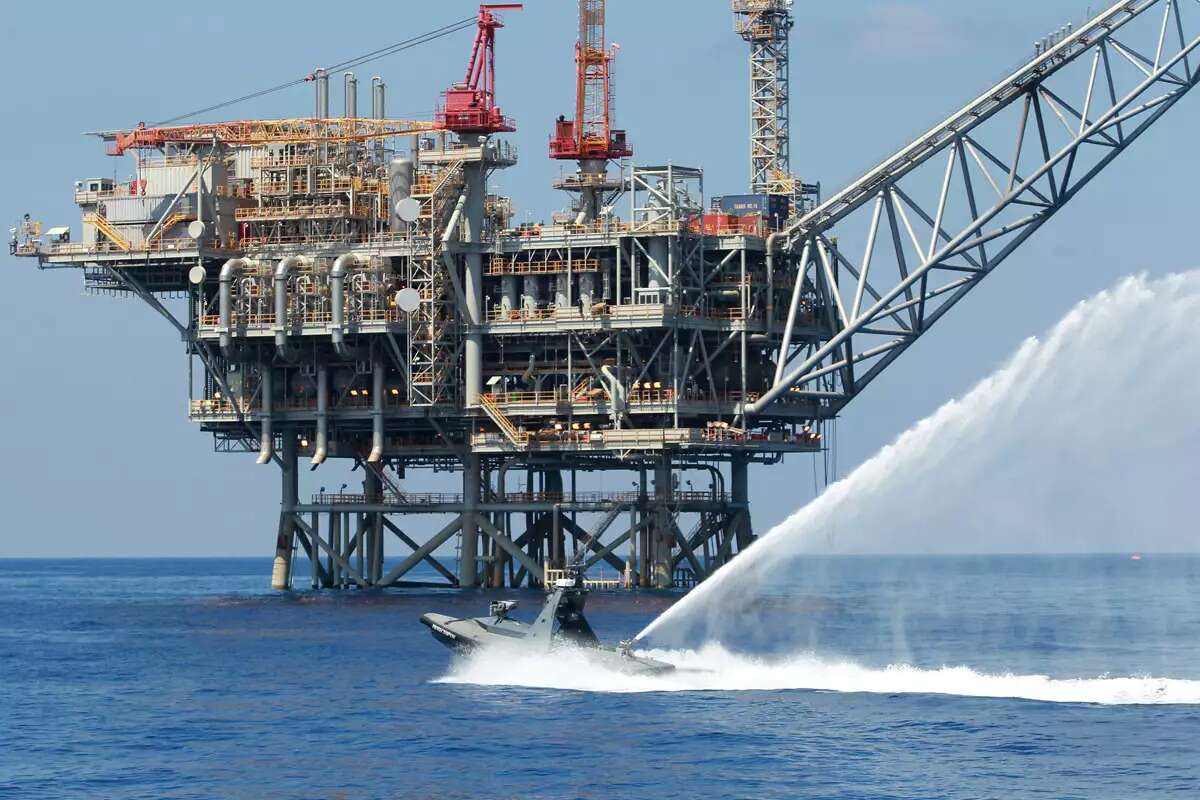
Gas en route to Egypt. (archive). Photo: Koko
A security achievement
As far as is currently known, none of these problems has been fully resolved. The excess Egyptian forces will remain in Sinai, but Egypt has given commitments to limit their activity. Prime Minister Benjamin Netanyahu hinted that Israel achieved several gains on the security front.
Despite the agreement, efforts to politically warm relations with Egypt have so far failed because of the war in Gaza, which has yet to end, and the tense atmosphere between the presidential palace in Cairo and the Prime Minister's Office in Jerusalem. The Americans examined the possibility of holding a summit meeting between Netanyahu and Egyptian President Abdel Fattah el-Sisi, with US President Donald Trump participating, but the Egyptians rejected the idea.
Alongside these issues, the gas agreement enables Israel to achieve several strategic objectives. The first is Egypt's dependence on Israeli gas, which it uses both for domestic energy needs and for liquefaction and export to Europe, a vital source of foreign currency without which Egypt's economy would collapse. Egypt has gas fields of its own, but they are insufficient for these purposes. This dependence constitutes Israeli diplomatic and security leverage over its southern neighbor, though its impact is limited to major strategic issues, chiefly reducing or even eliminating concerns that Egypt might cancel its peace treaty with Israel.
 P
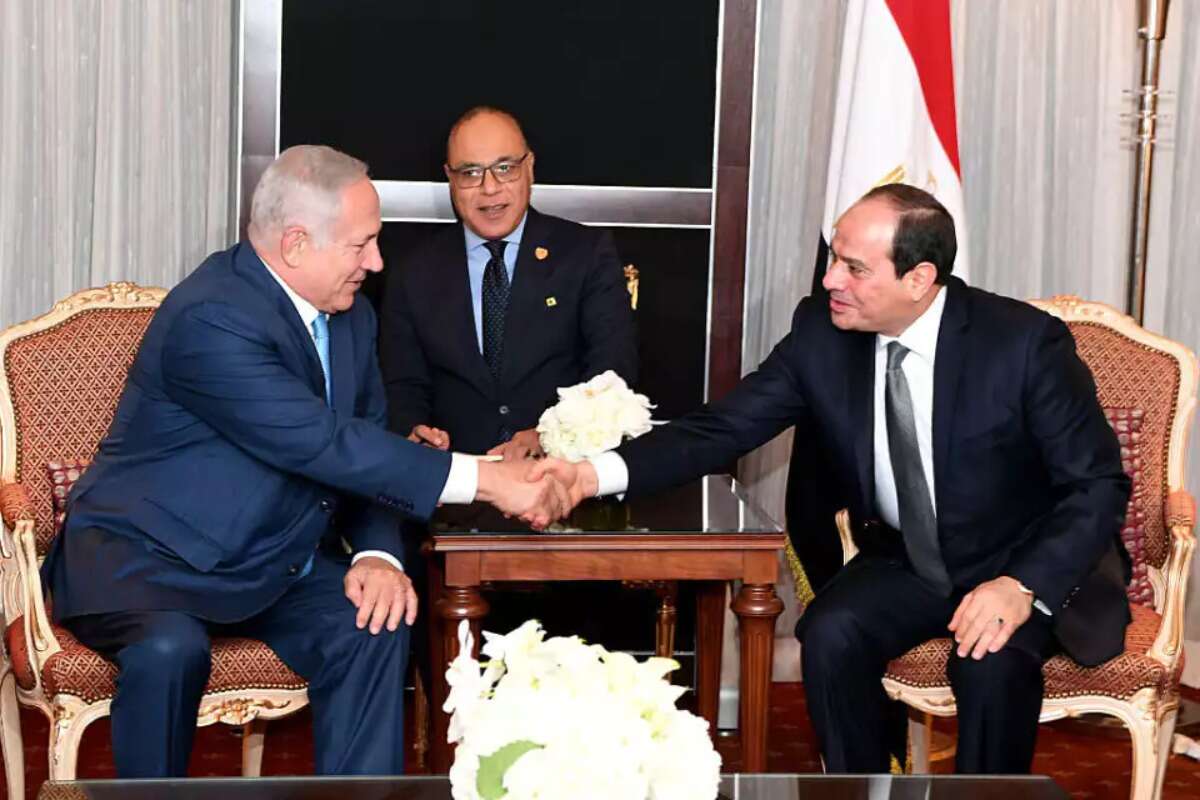
Prime Minister Benjamin Netanyahu meets with Egyptian President Abdel Fattah el-Sissi (archive). Photo: Avi Ohayon/GPO
An energy powerhouse?
Israel is consolidating its status as a regional power in the energy sector. It supplies gas to Egypt and also to Jordan, which uses it for a significant portion of its energy consumption. The agreement with Israel comes at Qatar's expense. Doha had been in talks with el-Sisi on building a new gas pipeline from Qatar's giant gas fields to Egypt. Laying such a pipeline would take years, and Egypt did not have the time to wait.
The agreement opens the door to additional energy projects in cooperation with Gulf states, projects that have been on the table for a long time and are expected to advance once an agreement is reached to bring Saudi Arabia into the Abraham Accords, likely not before elections and the formation of a new government in Israel.
In the energy sphere, under the agreement Israel will build an additional gas pipeline between Ramat Hovav and Nitzana, enabling further increases in exports to Egypt. The deal is expected to restart tenders for exploration of new gas fields in the eastern Mediterranean, and the Energy Ministry is set to renew preparations for those exploration bids.
Another reason for the delay in the agreement with Egypt was the Energy Ministry's demand that remaining reserves in existing fields be sufficient for Israeli domestic consumption and remain priced at the current low levels. According to the Energy Ministry, these demands were fully met.
Source: https://www.israelhayom.com/2025/12/17/the-real-purpose-of-israels-gas-deal-with-egypt/
.png)