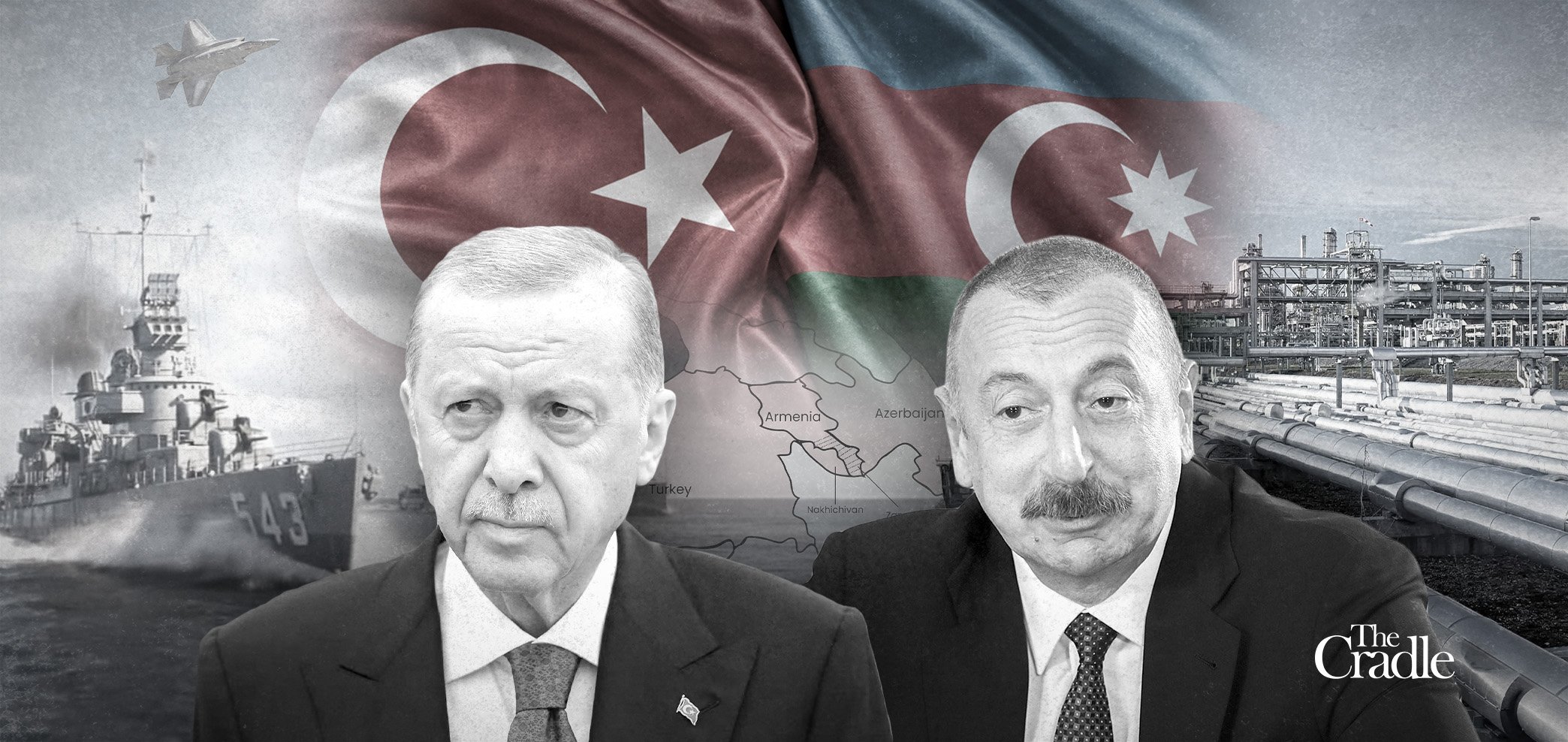
Baku’s growing independence and deepening ties with Israel are testing its alliance with Ankara, exposing wider tensions over regional influence and security.
Ehsan Movahedian, NOV 3, 2026
Azerbaijan is moving beyond Turkiye’s exclusive sphere of influence in the Turkic world, building closer ties with Ankara’s rivals and even its adversaries, above all Israel. This does not mean severing relations with Turkiye or abandoning Turkic institutions. Rather, Baku seeks to replace the “big brother, little brother” relationship with a wider network of partnerships, preserving its independence and room for maneuver.
The hijab dispute exposes a deeper rift
The tensions came into view in early October 2026, as disagreements surfaced regarding Baku’s domestic policies – specifically concerning the wearing of the hijab in schools – and its relationship with Israel. Azerbaijani President Ilham Aliyev’s emphasis on “ideological security” and the claim that his nation requires no external support served as a warning to Ankara regarding the limits of its influence.
Aliyev’s absence from the summit of Turkic states in Ankara, coupled with Turkish President Recep Tayyip Erdogan’s failure to attend the Conference on Interaction and Confidence Building Measures in Asia (CICA) summit in Baku, further exposed the rift.
The dispute intensified following an objection raised by Oktay Saral, an advisor to Erdogan, regarding dress code restrictions in Azerbaijani schools. Baku viewed this stance as an interference in its internal affairs.
While Erdogan reportedly dismissed Saral in an effort to contain the tension, the criticism persisted, with Baku firmly asserting its sovereign right to determine its own domestic policy. Samil Tayyar, a prominent figure within the Justice and Development Party (AKP), interpreted Aliyev’s absence as a possible reaction to Erdogan’s failure to attend the CICA summit in Baku on October 15. He warned that the two “brotherly nations” must not allow actors such as Israel to sow discord between them.
Tel Aviv tests the limits of brotherhood
Dr Ahmad Kazemi, an expert on Caucasus affairs, does not view Baku’s rapprochement with Israel as an emotional reaction to criticism from Turkiye. Instead, he assesses it as part of Baku’s wider strategy to deepen ties with Israel, which serves as its primary backer.
Over the past few decades, Israel has been a major supplier of advanced weaponry to Azerbaijan; furthermore, cooperation between the two sides has expanded to include the production of drones and precision-guided munitions, as well as collaboration in technology, agriculture, and cybersecurity. Data from oil tanker tracking indicates that approximately 34 million barrels of Azerbaijani crude oil reached Israel in 2025.
According to Kazemi’s assessment, Israel serves three purposes for Baku: the provision of technology and armaments; the establishment of a support base and a channel of influence in Washington; and the creation of markets alongside economic and security cooperation.
He argues that if Baku were forced to choose between Ankara and Tel Aviv, it would choose Israel. As a result, Turkiye’s expectation that Azerbaijan should fully align with its anti-Israel stance is incompatible with Aliyev’s strategic calculations; Baku is unwilling to sacrifice its relationship with Tel Aviv and Washington for the sake of political alignment with Turkiye.
This divergence in positions between Ankara and Baku was also highlighted during the quadrilateral summit held in Tehran on 26 October. Mohsen Rezaei, secretary of Iran’s Supreme National Security Council, said in an interview with Iranian state television after the talks that officials from Iran, Saudi Arabia, Turkiye, and Pakistan have spoken out firmly against Israel.
According to him, Saudi Defense Minister Khalid bin Salman remarked: “After Iran, Israel will turn its attention to Turkiye, and subsequently target Saudi Arabia.”
Rezaei also noted the stern stances taken against Israel by Ibrahim Kalin, head of Turkiye’s National Intelligence Organization (MIT), and Pakistan's Chief of Army Staff Asim Munir. The meeting offered another illustration of the distance between Ankara’s position on Israel and Baku’s.
Turkiye faces a tightening regional contest
In the Eastern Mediterranean, defense and economic cooperation among Greece, Cyprus, and Israel has expanded. The tenth trilateral summit of these nations' leaders took place in Jerusalem on December 22, 2025, and a joint military action plan for 2026 – encompassing joint training and operational activities – was signed in Nicosia.
The “3+1” energy framework, which includes the US, has drawn Washington more closely into this cooperation. From Ankara’s perspective, this negatively impacts the security balance as well as Turkiye’s freedom of action regarding maritime affairs and energy.
In Libya, Greece has also deepened its ties with the power structure in the country’s east – notably through meetings between Greek officials and Libyan Deputy General Commander Saddam Haftar to discuss energy and transport, alongside the continued training of Libyan Coast Guard officers in Crete.
Conversely, on October 20, 2026, the House of Representatives in eastern Libya ratified the 2019 maritime agreement between Turkiye and the Government of National Accord (GNA), reversing its previous opposition.
While this decision strengthened the domestic legitimacy of the agreement, it did not resolve the legal disputes with Greece and the EU concerning the agreement's implications and the maritime rights of Greek islands.
The deterioration of relations between Turkiye and Israel, coupled with Israel’s defense cooperation with Greece and Cyprus, has heightened Ankara’s concerns. Meanwhile, Turkiye has sought to expand its regional partnerships, as evidenced by its Strategic Cooperation Council meeting with Egypt in February 2026.
Ankara also remains excluded from the F-35 program following its purchase of Russia’s S-400 air defense system and subsequent US sanctions. Across the Eastern Mediterranean, competition over military influence, energy resources, and transit routes continues to intensify, adding to the pressures facing Turkiye.
Which fractures will endure?
Seyyed Mehdi Hosseini Taghi-Abad, an assistant professor at the University of Tehran, characterizes current developments as a “major shift in alignments,” though he notes that not all components of this shift are likely to endure.
According to him, tensions surrounding the issue of the hijab, the absence of the leaders of Azerbaijan and Turkiye from certain summits, and various verbal spats could subside through political engagement or mediation; this is because the two nations share structural interests in sectors such as energy, transportation, joint military exercises, and economic ties.
Taghi-Abad adds, however, that Baku’s independent course of action and its established partnership with Israel – unlike these episodic disputes – are deeply rooted in Azerbaijan’s foreign policy. Bolstered by the victory in Karabakh and emphasizing the procurement of weaponry using its own financial resources, Aliyev seeks to solidify an independent identity and shed the role of Ankara’s “little brother.”
In previous years, Aliyev had already taken steps – such as curbing Nakhchivan’s autonomous institutions – to diminish Turkish influence within the country. Currently, he displays his alliance with Israel before Turkiye, calculating that it is Turkiye that requires Azerbaijan to gain access to Central Asia and the South Caucasus. Aliyev believes that, given Russia’s need for his country to circumvent western sanctions – coupled with Trump’s support for Azerbaijan – he is in a position to stand up to Turkiye.
Four paths for Ankara
Dr Shiva Alizadeh, an assistant professor at the University of Tehran, argues that Turkiye’s regional ambitions have increasingly brought it into conflict with the interests of Azerbaijan and other neighboring states. She identifies four possible paths for Ankara:
First: A tactical pivot toward Iran and the Axis of Resistance. Pressures stemming from tensions with Israel could drive Turkiye to cooperate more closely with Tehran on regional security; however, conflicting interests in Syria and the Caucasus will likely prevent this rapprochement from evolving into a stable alliance.
Second: Rebuilding ties with the west and de-escalating tensions with Greece and Europe. By reducing friction in the Eastern Mediterranean and resuming dialogue with Europe and Cyprus, Ankara could alleviate some of the pressure it faces – though this path would require moderating its maximalist positions and accepting the associated domestic political costs.
Third: Managing tensions with Baku and accepting Azerbaijan’s new role. A more realistic approach to maintaining the alliance would be to acknowledge Baku’s autonomy and redefine the relationship based on equal partnership – including accepting Azerbaijan’s independent ties with Israel and Greece. Such an arrangement would allow cooperation to continue without requiring Baku to follow Ankara’s political lead.
Fourth: Intensifying isolation and adopting an aggressive stance. Unilateral actions in the Eastern Mediterranean or increased intervention in Libya could exacerbate rivalries and heighten the risk of confrontation – a path that represents the most costly option for Turkiye.
An alliance on new terms
Baku is increasingly determined to pursue its own course, even when that brings it into conflict with Ankara. Its ties with Turkiye remain important, but Aliyev has shown little willingness to allow them to dictate Azerbaijan’s relations with Israel or other regional powers.
The recent diplomatic disputes may fade, but the differences behind them are unlikely to disappear. Azerbaijan’s military and energy ties with Israel are firmly established, and Ankara may have to accept that its closest ally in the Caucasus no longer intends to follow its lead.
Source: https://thecradle.co/articles/turkiyes-little-brother-no-more-azerbaijan-charts-its-own-course