Ο Ερντογάν επιστρέφει στον Λευκό Οίκο για μια επίδειξη προσωπικής χημείας με τον Τραμπ και deals - Τα αγκάθια όμως επιμένουν
Νατάσα Στασινού • nstasinou@naftemporiki.gr
Για πρώτη φορά έπειτα από σχεδόν έξι χρόνια, ο Ρετζέπ Ταγίπ Ερντογάν θα καθίσει απέναντι από τον Ντόναλντ Τραμπ στον Λευκό Οίκο.
Δεν πρόκειται απλώς για μια διπλωματική επαναπροσέγγιση, αλλά για μια συνάντηση που έχει βαθιά συμβολική διάσταση: δύο ηγέτες που μιλούν την ίδια «γλώσσα» εξουσίας προσπαθούν να επανασυνδεθούν με μία ατζέντα γεμάτης ανοικτά μέτωπα.
Κοινή κοσμοθεωρία
Η σχέση Τραμπ – Ερντογάν αναγεννιέται όχι μόνο ως μια πολιτική σύμπτωση, αλλά ως κοινό αφήγημα εξουσίας, σχολιάζει το Brookings Institute.
Πολύ πριν ο Τραμπ έρθει στο προσκήνιο της πολιτικής σκηνής, ο Ερντογάν είχε χτίσει έναν λαϊκιστικό λόγο «με επιστροφή στην αναγέννηση» – βάζοντας στο επίκεντρο την εθνική υπερηφάνεια, την κυριαρχία και την απόρριψη των ελίτ. Ο Τραμπ έκανε σλόγκαν του το «Make America Great Again» – μια ρητορική που μιλά σε όσους αισθάνονται ότι αποκλείστηκαν από το υπάρχον πολιτικό και οικονομικό σύστημα.
Και οι δύο είδαν την πολιτική σκηνή ως πεδίο μάχης εναντίον του «κατεστημένου» — των παλιών ελίτ, των διεθνών θεσμών, της παγκοσμιοποιημένης ισχύος.
Πιστεύουν ότι η Ιστορία επιφυλάσσει για αυτούς ξεχωριστή θέση. Ότι τους έχει επιλέξει να αναμορφώσουν τον κόσμο — και ότι η εξουσία πρέπει να ασκηθεί προσωπικά, όχι μέσω ανωνύμων θεσμών. Αυτή η κοινή κοσμοθεωρία είναι που τους ενώνει.
Η εικόνα και τα άμεσα κέρδη
Η επιστροφή στον Λευκό Οίκο παρουσιάζεται από την Άγκυρα ως ένα success story. Μετά την παγωμάρα της περιόδου Μπάιντεν, όταν οι ΗΠΑ κράτησαν τον Ερντογάν σε απόσταση λόγω δημοκρατικής οπισθοδρόμησης και γεωπολιτικών τυχοδιωκτισμών, ο Τούρκος ηγέτης θέλει να δείξει ότι η εποχή της ψυχρότητας ανήκει στο παρελθόν.
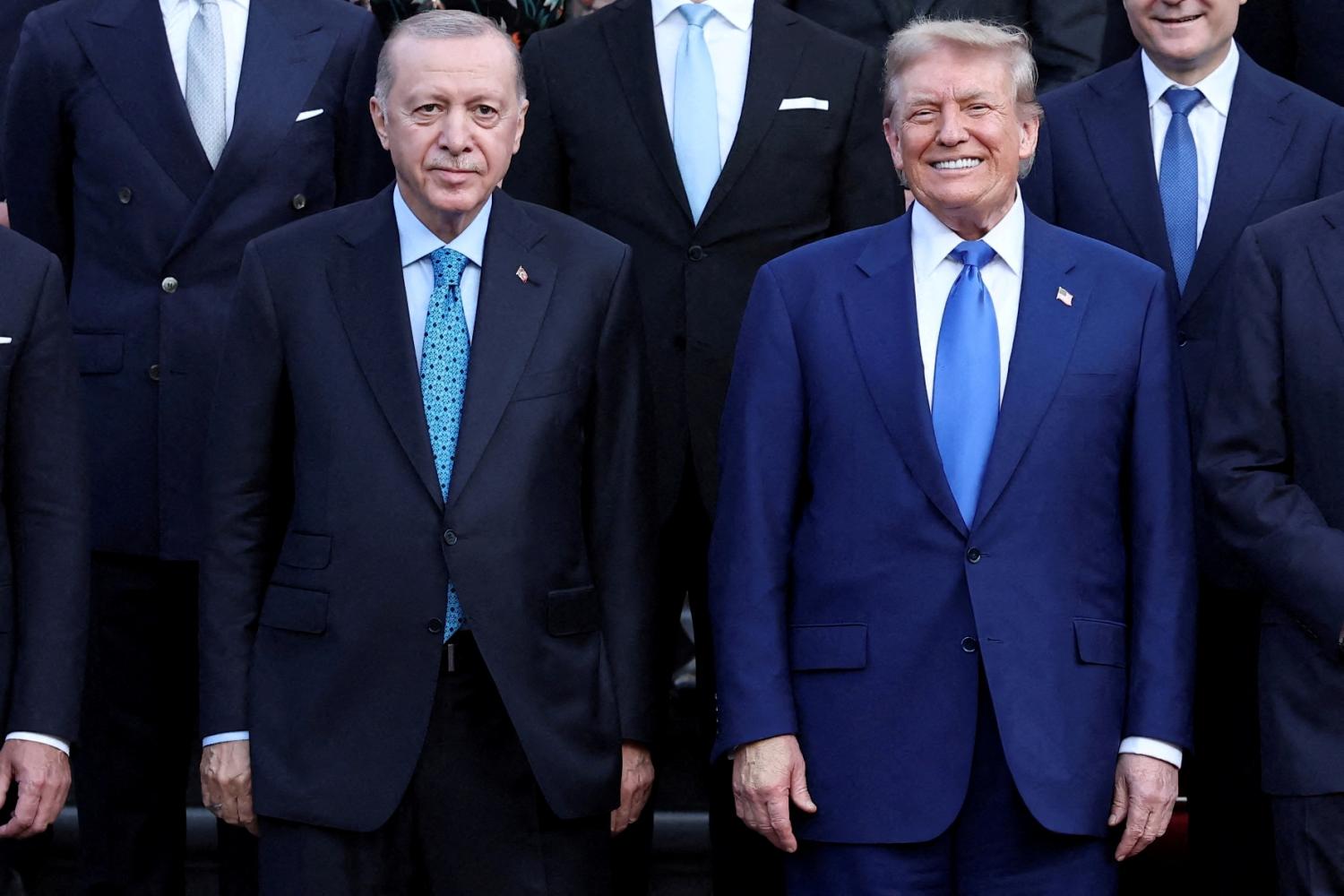
Στην Ουάσιγκτον, από την άλλη, ο Τραμπ προτίθεται να δώσει πλήρη προβολή στο προσωπικό του «bromance» με τον Ερντογάν: με θερμές χειραψίες, μεγάλα λόγια και εντυπωσιακές ανακοινώσεις. εικόνα ενός Αμερικανού προέδρου που «επαναφέρει» έναν δύσκολο σύμμαχο στο δυτικό στρατόπεδο θα παρουσιαστεί ως διπλωματική επιτυχία· για τον Ερντογάν, το ίδιο μήνυμα θα σταλεί ως απόδειξη ότι παραμένει παίκτης πρώτης γραμμής.
Νέα ευθυγράμμιση στη Συρία
Ένα ακόμη στοιχείο που ξεχωρίζει είναι η Συρία. Χάρη στον νέο ισχυρό απεσταλμένο των ΗΠΑ, τον Τομ Μπαράκ, οι δύο πλευρές εμφανίζονται πιο συντονισμένες από ό,τι στο παρελθόν.
Όπως και η Άγκυρα, έτσι και η Ουάσιγκτον στηρίζει πλέον την ιδέα μιας μεταβατικής κυβέρνησης στη Δαμασκό υπό τον Αχμάντ αλ-Σαράα και την ενότητα του συριακού κράτους. Η ενσωμάτωση των κουρδικών δυνάμεων SDF στον εθνικό στρατό – με μεγαλύτερη αυτονομία από όση θα ήθελε η Τουρκία – είναι πάντως ένα αγκάθι.
Οι δύο ηγέτες έχουν την ευκαιρία μπροστά στις κάμερες να μιλήσουν για «σταθεροποίηση» και «νέα αρχή» στη Μέση Ανατολή.
Η μόνιμη σκιά των S-400
Παρά τις φιλοφρονήσεις, τα αγκάθια δεν εξαφανίζονται. Η αγορά των ρωσικών S-400 παραμένει η πιο εκρηκτική διαφορά. Οι κυρώσεις του νόμου CAATSA εξακολουθούν να ισχύουν, ενώ η αποπομπή της Τουρκίας από το πρόγραμμα των F-35 δεν έχει ανατραπεί.
Ο Ερντογάν θα επιμείνει ότι είναι άδικο να τιμωρείται μια χώρα-μέλος του ΝΑΤΟ, ο Τραμπ θα αφήσει να εννοηθεί ότι βλέπει θετικά την επιστροφή, αλλά το Κογκρέσο εξακολουθεί να έχει τον τελευταίο λόγο.
Ακόμη και αν η Ουάσιγκτον συμφωνήσει, οι καθυστερήσεις στην παραγωγή σημαίνουν ότι η παράδοση θα αργήσει χρόνια και θα εξαρτηθεί από τον εκάστοτε ένοικο του Οβάλ Γραφείου.
Η Γάζα ως «κόκκινη γραμμή»
Το πιο δύσκολο ζήτημα είναι ο πόλεμος Ισραήλ – Χαμάς. Η Γάζα έχει εξελιχθεί στον μόνιμο παράγοντα τριβής. Ο Ερντογάν έχει χτίσει την εικόνα του ως ο σκληρότερος επικριτής του Τελ Αβίβ και υπέρμαχος των Παλαιστινίων.
Ο Τραμπ, αντίθετα, έχει αποκαταστήσει την παραδοσιακή «ολική στήριξη» της Ουάσιγκτον προς το Ισραήλ.
Το χάσμα αυτό μπορεί να οδηγήσει τον Αμερικανό πρόεδρο στον άχαρο ρόλο του διαιτητή για να αποφευχθεί μια απευθείας σύγκρουση Τουρκίας–Ισραήλ στη Συρία. Δεν αποκλείεται, μάλιστα, το θέμα να βγει και δημόσια στη συνέντευξη Τύπου, με εμφανείς εντάσεις.
Χημεία χωρίς θεσμούς
Τραμπ και Ερντογάν μοιράζονται την ίδια εκτίμηση για την «προσωποποιημένη διπλωματία» και τον ρόλο του ισχυρού ηγέτη. Αλλά η εμπειρία της πρώτης θητείας του Αμερικανού προέδρου έδειξε ότι η παράκαμψη θεσμών και η αποκλειστική εξάρτηση από προσωπικές σχέσεις δημιουργεί περισσότερα προβλήματα από όσα λύνει.
Οι εκκρεμότητες —S-400, Ισραήλ, Κούρδοι— δεν θα εξαφανιστούν με ένα χαμόγελο μπροστά στις κάμερες. Ούτε με την αγορά εκατοντάδων Boeing (για τα οποία σημειωτέον ο Ερντογάν θέλει μέρος της παραγωγής στην Τουρκία).
Τι περιμένουμε να δούμε
-Αν ο Τραμπ — μπροστά στις κάμερες — δεσμευτεί έστω ρητορικά για επανένταξη της Τουρκίας στο πρόγραμμα F-35.
-Αν υπάρξουν δηλώσεις για ενίσχυση της τουρκικής πολεμικής αεροπορίας
-Πώς θα χειριστούν τις διαφορετικές θέσεις στο ζήτημα της Γάζας
-Ποιες λεπτομέρειες θα διαφανούν στις συμφωνίες Boeing / επενδύσεων — αν υπάρχει συγκεκριμένο χρονοδιάγραμμα ή παραγωγή μέρους στην Τουρκία.
-Πώς θα παρουσιαστεί η συμμετοχή ή ο ρόλος των SDF σε μια νέα συριακή δομή.
-Πόσο δυνατά θα «βγει» το θέμα των δημοκρατικών ελευθεριών στην Τουρκία στο παρασκήνιο — ή αν θα αποσιωπηθεί εντελώς.
Η σημερινή επίσκεψη είναι σχεδιασμένη για εντυπωσιακές εικόνες: συμφωνίες, δηλώσεις, χειραψίες. Για τον Τραμπ, θα είναι ευκαιρία να εμφανιστεί ως ο πρόεδρος που ξαναφέρνει την Τουρκία πιο κοντά στη Δύση.
Για τον Ερντογάν, ως απόδειξη ότι η Άγκυρα εξακολουθεί να μετρά στη διεθνή σκηνή. Όμως χωρίς σταθερό μηχανισμό συνεργασίας, οι εντυπώσεις θα ξεθωριάσουν και τα αγκάθια θα επιστρέψουν. Η Ιστορία έχει δείξει ότι το «bromance» μπορεί να προσφέρει καλές φωτογραφίες, όχι όμως ανθεκτικές λύσεις.
Πηγή: naftemporiki.gr
A bromance revived: Erdoğan returns to the White House after 4 years
Aslı Aydıntaşbaş, September 23, 2025
When Turkish President Recep Tayyip Erdoğan steps through the White House gates on September 25, it won’t just be a return after four years—it will be a personal reunion of two leaders who, for better or worse, share a worldview about the global order and govern with increasingly similar instincts.
Erdoğan, after all, is the original “Make [X] Great Again” right-wing populist. Both he and U.S. President Donald Trump rose to the apex of power on the back of rejection from their countries’ elites, share a disdain for the liberal hegemony that has shaped the international system for the past three decades, and firmly believe in their place in history.
Erdoğan’s return to the White House is designed as a victory lap. After four years of lull in U.S.-Turkey ties—shaped by the Biden administration’s reluctance to engage him because of democratic backsliding and geopolitical hedging—expect a full display of the Trump-Erdoğan bromance, with bold gestures and surprising announcements. Both capitals are hoping to highlight short-term wins, including Turkey’s multibillion-dollar purchase of a new batch of Boeing planes and Trump’s potential, at least rhetorical, support for Ankara’s reentry into the F-35 program.
Turkey and the United States are also more aligned than ever on Syria, with Trump ally and Washington’s powerful new Turkey envoy, Tom Barrack, serving as the connective tissue in synchronizing U.S.-Turkish ties with Washington’s new Syria policy. Like Ankara, Barrack has embraced the post-Assad regime in Damascus, led by interim President Ahmad al-Sharaa; supports the idea of a unified Syria; and broadly accepts the integration of U.S.-backed Syrian Kurds, the Syrian Democratic Forces (SDF), into the Syrian military—though with greater local autonomy than Ankara would prefer.
While pursuing an “America First” agenda, Trump also seems to recognize Turkey’s potential as a hefty middle power in a multipolar world. Washington and Ankara are seeking to expand trade toward the $100 billion target set during Trump’s first term and eyeing regional economic opportunities tied to Syria’s reconstruction and the construction of the Trump Route for International Peace and Prosperity (TRIPP)—announced in August as part of a recent peace deal between Armenia and Azerbaijan.
Coherence and process matter more than ever
While the Trump-Erdoğan nexus explains why many U.S. positions now appear closer to Ankara’s worldview, significant bilateral issues remain unresolved. The S-400 dispute is still on the table, with Countering America’s Adversaries Through Sanctions Act (CAATSA) sanctions intact. Stalled talks between Damascus and U.S.-backed Syrian Kurds mean Syria’s future and stability remain uncertain as well. An uneasy peace on the ground could be upended by a new Turkish incursion if there is no deal on the horizon.
More importantly, there is Israel. Tensions between Ankara and Jerusalem over Gaza and Syria have become a permanent risk factor for U.S. policy in the region, requiring constant U.S. arbitration to prevent direct military confrontation inside Syria.
Trump and Erdoğan share a mutual appreciation for strong leadership and personalized diplomacy, but these problems are complex and require institutional, deliberate policymaking processes. During Trump 1.0, the two leaders discovered that sidelining bureaucracy and relying solely on phone calls and personal favors did not make disputes disappear—instead, it often created blowback. They should not repeat that mistake.
What to watch for on September 25 and after
As Erdoğan returns to the White House, several signals will be especially revealing—and the success of the meeting will not depend on Oval Office optics but on whether Washington and Ankara can chart durable policy prescriptions.
F-35s and military sales. The thorniest agenda item is Turkey’s 2019 purchase of Russian S-400 air defense systems, which triggered CAATSA sanctions and Ankara’s expulsion from the F-35 program. Erdoğan will press for reentry, arguing that it is unfair to punish a NATO ally when the alliance needs stronger defense capabilities. Trump, eager for a win, may hint at future sales, but Congress remains hostile to Turkey’s Russian ties and human rights record, and Israel will oppose any move to strengthen Turkey’s air force. Greece was promised a qualitative military edge over Turkey during the Biden administration and will similarly oppose the sale of F-35s to Turkey. Even if the administration pushes ahead, F-35 production is facing delays amidst rising demand, meaning delivery could be delayed four to five years—creating risks of reversal under a future U.S. president.
Tensions with Israel. Gaza has become the defining fault line between Ankara and Washington. Turkey resents Israel’s rise as a regional hegemon and its strategy of “mowing the grass” to preserve military dominance over neighbors. Erdoğan has positioned Turkey as Israel’s fiercest critic and the Palestinians’ advocate, while Trump has restored Washington’s full-throated backing of Israel’s security. With Syria’s future, Gaza’s reconstruction, and regional stability at stake, the White House may again find itself refereeing between the two to reduce risks of confrontation inside Syria, especially as Ankara seeks to expand its military footprint there. It will be awkward, but conceivable, for Erdoğan and Trump’s Gaza/Israel conversation to spill into the public space before cameras on Thursday.
Syria. Thanks to Ambassador Tom Barrack, Washington and Ankara are more aligned than at any point in recent memory. Both see al-Sharaa’s interim government as a chance for stabilization and reconstruction. Both support some integration of the SDF into the national army, though Erdoğan insists Kurdish autonomy cannot cross Turkey’s red lines—loosely defined as the establishment of a federation and the SDF retaining full control of its forces. Success depends on the fragile Kurdish peace process inside Turkey and on whether U.S. officials can broker a governance deal between Damascus and the SDF, agreed to in principle in March, that averts another Turkish military incursion. The summit may look rosy, but the real test will be whether this alignment translates into coherent policy on the ground and can translate to a Turkish-Kurdish peace.
Ukraine. The war in Ukraine and Turkey’s potential role in a postwar settlement will likely be raised during the Oval Office meeting, but without much resonance on the current European debate. Ankara and the Trump administration share similar views on Russia and the endgame in Ukraine—shaped by a cynical belief in Russian military capabilities and the idea that peace will only come through Ukrainian territorial and political concessions. Turkey would contribute to a postwar settlement by securing the Black Sea but would shy away from a European force without a U.S. backstop.
Economic partnership. Beyond geopolitics, both leaders want to spotlight economic ties. Ankara hopes to revive the dormant $100 billion trade goal from Trump’s first term and has recently lifted tariffs on US imports, while Trump sees Syria’s reconstruction and TRIPP as avenues for joint investment. Energy deals, aviation purchases, and construction contracts could provide quick wins, but sustaining such trade will require Turkey to move beyond reliance on construction and the defense sector, and instead adapt its economy to technological transformation in an age of artificial intelligence.
Democracy. One area where U.S. policy has diverged sharply across administrations is democracy and human rights in Turkey. Under President Joe Biden, Ankara’s backsliding was reason enough to keep Erdoğan at arm’s length. Under Trump, those concerns have largely disappeared from the agenda. Neither side is likely to raise the issue this week.
But Erdoğan’s crackdown on opposition at home carries foreign policy consequences. Europe, in particular, sees Turkey’s democratic trajectory as central to its relationship with Ankara. The recent targeting of the main opposition Republican People’s Party has reinforced concerns that Turkey is sliding further from European norms. European Union governments have made clear that progress on trade, visas, and Turkey’s place in Europe’s security architecture depends on improvements in the rule of law and political freedoms. Turkey’s domestic course may not be a problem for Trump, but it will be for European allies—and could harden their resolve to keep Turkey at a distance, as they did during Trump’s first term, with implications for Turkey’s economy and military industrial partnership with Europe.
Conclusion
Erdoğan’s return to Washington is meant to signal that the chill of the Biden years is over, and he will certainly feel that warmth on Thursday. But personal chemistry cannot disguise the challenges weighing down the U.S.-Turkey relationship: S-400 sanctions, divergent approaches to Israel, and congressional mistrust fueled by Turkey’s geopolitical hedging or democratic backsliding.
For Trump, the temptation will be to showcase positives—the Boeing deal, vague promises on F-35s, even a new public role as a mediator between Turkey and Israel. For Erdoğan, the goal is to show friends and foes that Ankara still commands attention in Washington and to pry open the door on military sales. Both may get their optics.
But if history is a guide, optics without process are fleeting. The United States and Turkey need a sustainable mechanism to align their interests, manage their differences with Israel, and work toward a peaceful resolution of the Kurdish question—both inside Turkey and in Syria. Otherwise, the September 25 meeting will not be remembered as a turning point, but as another chapter in a long saga of short-term bargains and long-term drift.
Source: https://www.brookings.edu/articles/a-bromance-revived-erdogan-returns-to-the-white-house-after-4-years/
.png)